As an Amazon Associate, CozyMorph earns from qualifying purchases. This post may contain affiliate links, which means we may earn a small commission at no extra cost to you.
If your apartment feels full the minute you walk in, you are not doing anything wrong. Small spaces simply show every extra thing. A stack of mail, three throw pillows too many, a chair that is really a laundry pile: in 500 square feet, it all adds up fast.
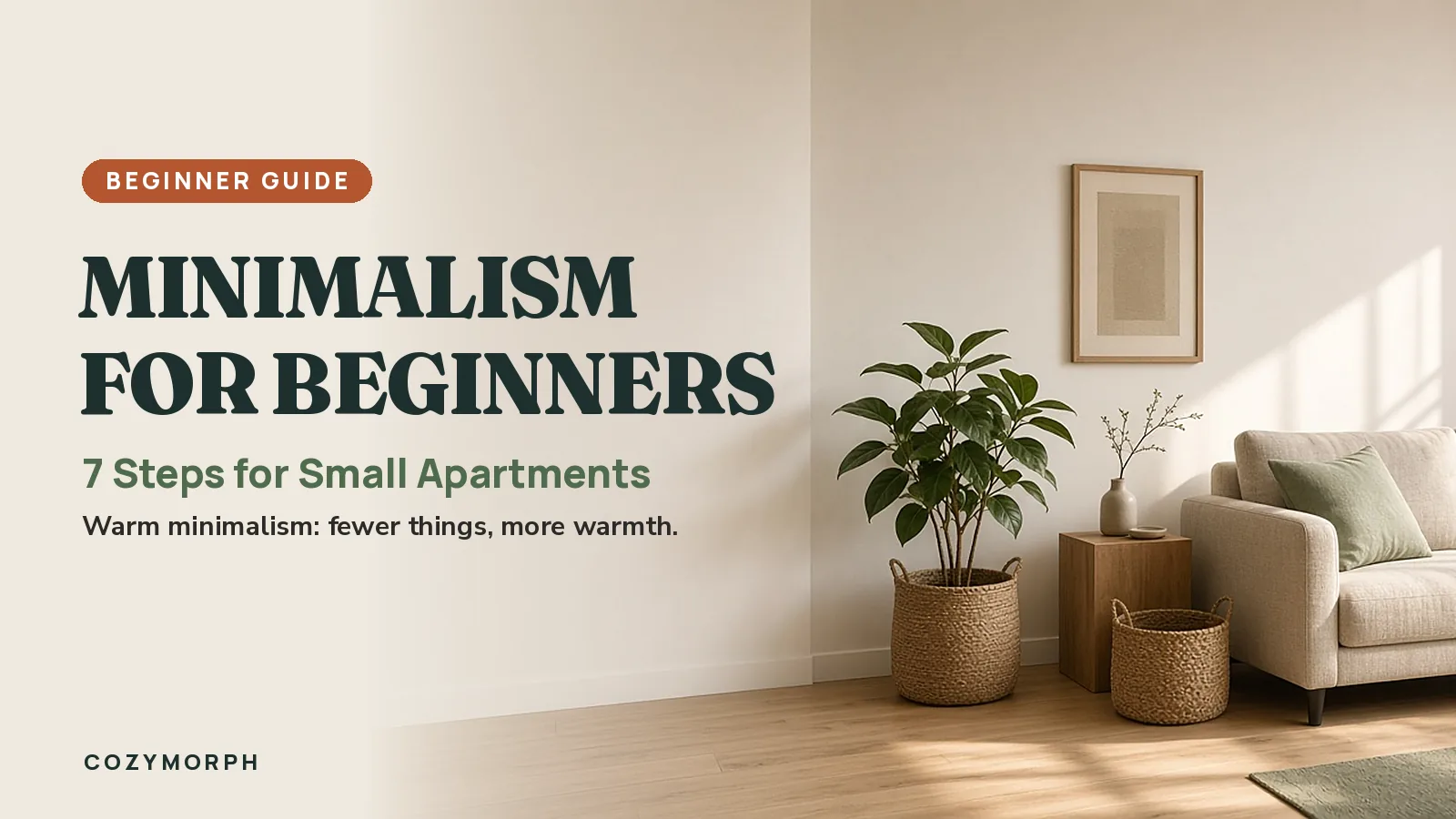
That is where minimalism helps. Not the cold, all-white, nothing-on-the-walls version you see in magazines, but a warmer, gentler kind that keeps the things you love and lets go of the rest. This guide to minimalism for beginners is written for renters and small-apartment dwellers who want a calmer home without throwing out their personality.
Quick Answer
Minimalism for beginners starts with one question: does this item earn its space in my home? Begin with a single small area (a drawer, a counter, a shelf), keep what you use and love, and donate or recycle the rest. Give every remaining item a home, use the one in one out rule to stop new clutter, and add warmth back with texture, soft lighting, and a few meaningful pieces. Go slowly. A small apartment gets calmer one surface at a time.
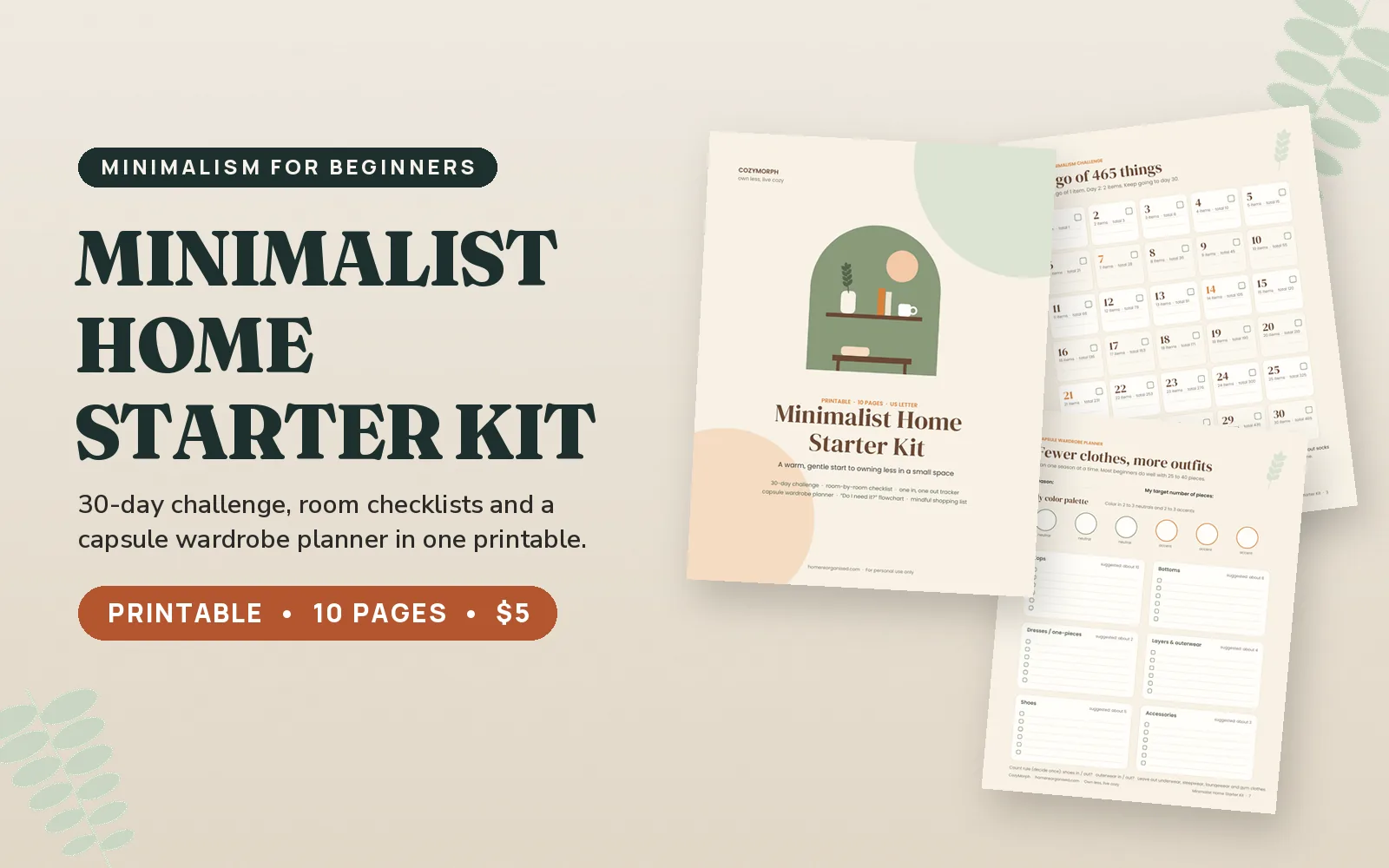
Ready to start? The CozyMorph Minimalist Home Starter Kit gives you a 30-day challenge, room checklists and a capsule wardrobe planner in one printable.
What Minimalism Actually Means (and What It Doesn’t)
Minimalism is the habit of keeping what adds value to your life and removing what doesn’t. That’s it. There is no magic number of items, no required color palette, and no rule that says you can’t own books or a cozy blanket.
For small-space living, it helps to think of minimalism as editing, not emptying. You are making room so the things you keep can actually be seen, reached, and enjoyed.
Minimalism is not
- Owning as little as possible. The goal is enough, not zero.
- A style you have to buy. You don’t need new furniture to start. Most people begin by removing things, which costs nothing.
- Cold or sterile. Many people now prefer “warm minimalism”: fewer things, but natural textures like wood, linen, and wool, plus soft warm light.
- A one-weekend project. It is a set of small habits that keep working long after the first declutter.
Why Minimalism Works So Well in a Small Apartment
In a big house, clutter can hide in a basement or spare room. In a studio or one-bedroom, there is nowhere to hide it. Every object you own is competing for the same few closets, counters, and corners.
Here is what changes when you own less in a small space:
- The room looks bigger. Clear floors and open surfaces let your eye travel, so the space reads as larger.
- Cleaning gets faster. Fewer things on surfaces means less to lift, dust, and put back.
- You find things. When each item has one home, you stop buying duplicates of things you already own.
- Moving is easier. Renters move more often. Fewer boxes means less stress and a smaller moving bill.
How to Start Minimalism in a Small Apartment: 7 Beginner Steps
1. Write down your “why”
Before you touch a single drawer, decide what you want your home to feel like. Calm when you wake up? Easy to clean? Ready for guests? Write one sentence and stick it on the fridge. When you are unsure about an item later, your “why” makes the decision easier.
2. Start with one small, visible spot
Beginners often try to declutter the whole apartment in a day and burn out by lunch. Instead, pick one place you see every day: the kitchen counter, the entryway, or your nightstand. A quick visible win builds momentum. If you want a guided start, our free 7-Day Declutter Checklist walks you through one 15-minute zone per day.
3. Use the four-box method
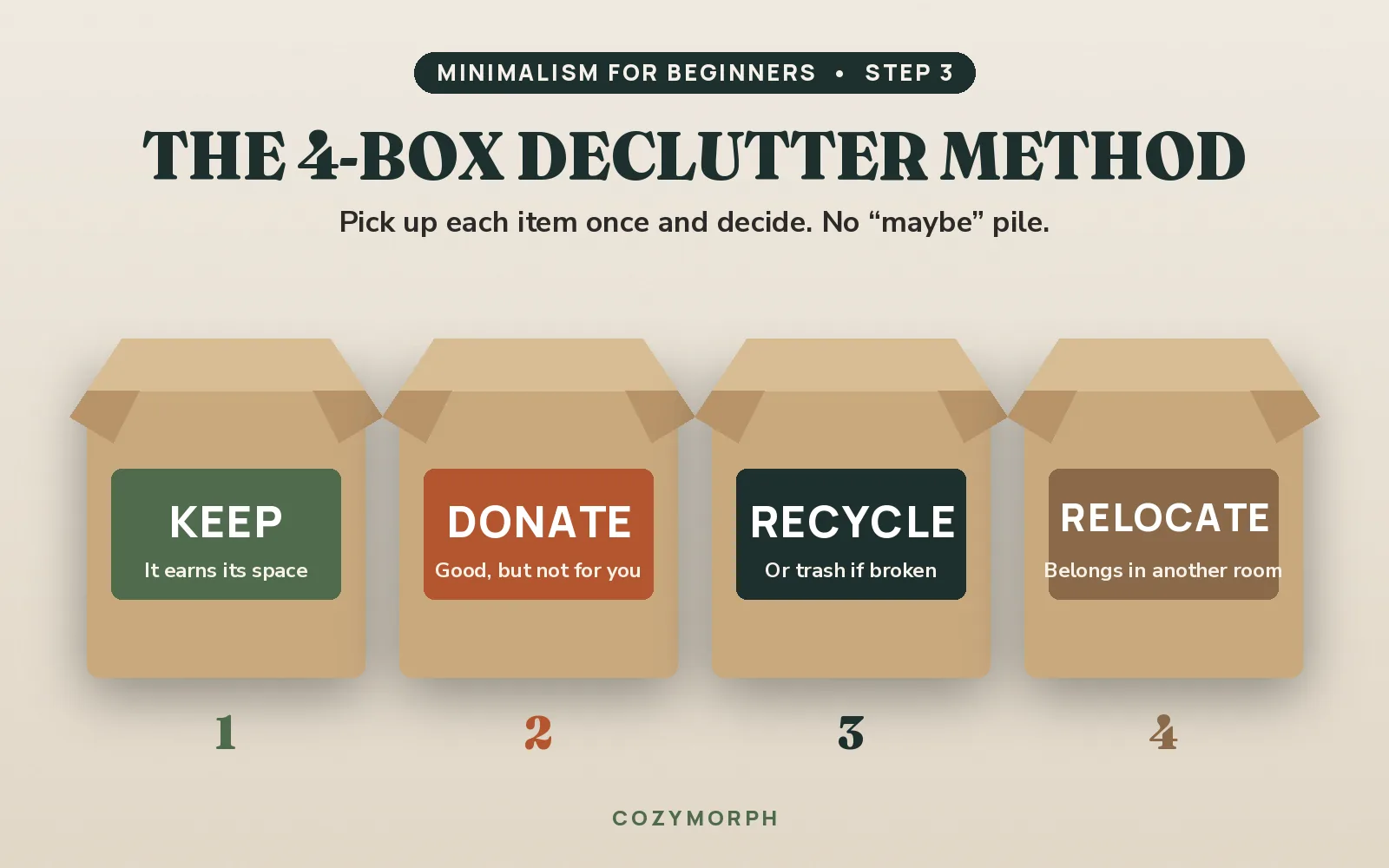
Set out four boxes or bags labeled Keep, Donate, Recycle/Trash, and Relocate (items that belong in another room). Pick up each item once and decide. Don’t let anything go back into the space until the area is empty and wiped down.
A set of collapsible fabric bins works well for sorting, and they fold flat when you’re done, which matters when storage is tight.
4. Ask better questions than “Might I need this?”
Almost anything might be useful someday. Try these questions instead:
- Have I used this in the last 12 months?
- If I lost it, would I buy it again at full price?
- Do I have something else that does the same job?
- Is it worth the space it takes up in a small apartment?
- Am I keeping it out of guilt (it was a gift, it was expensive) rather than use?
If an item fails two or more, it’s probably ready to go.
5. Give everything a home
Clutter is often just stuff without an address. Once you’ve edited a space, assign every remaining item a specific spot, ideally close to where you use it. Keep everyday things between knee and shoulder height, and push rarely used items up high or under the bed.
6. Clear the surfaces, then the floors
Horizontal surfaces are clutter magnets. Aim to keep only a few daily-use items out on each counter, table, and dresser. Then work on the floor: no piles, no “temporary” boxes. Visible floor space is one of the quickest ways to make a small room feel open.
7. Build a 10-minute evening reset
Minimalism stays easy when you reset daily. Before bed, set a timer for 10 minutes: return items to their homes, clear the coffee table, and load the dishwasher or wash the last dishes. It’s a small habit that stops clutter from building up again.
Room-by-Room Minimalist Apartment Ideas
Living room
- Choose one main seating piece and skip the extra accent chairs if they mostly hold laundry.
- Pick furniture with legs. Seeing floor underneath makes the room feel lighter.
- Use closed storage so remotes, chargers, and blankets disappear. A storage ottoman with a lid doubles as a footrest, extra seat, and blanket bin.
- Limit shelf decor to a few objects per shelf, mixing in a plant or a stack of books.
Bedroom
- Keep the nightstand to a lamp, a book, a charger, and one comfort item.
- Move off-season clothes and spare bedding into under-bed storage bins with lids so the closet only holds what you wear now.
- Use one set of sheets on the bed and one in the wash. Most small households don’t need more.
Kitchen
- Clear the counters down to the appliances you use daily.
- Donate duplicate gadgets: you probably need one good spatula, not five.
- Keep a short “use it up” basket for opened snacks and pantry items so food doesn’t get forgotten.
- For storage ideas that don’t need drilling, see how to organize a small pantry without shelves.
Bathroom
- Toss expired medicine, sunscreen, and makeup (check the dates).
- Keep only products you use weekly. Store backups in one small bin, not scattered around.
- Aim for two or three items on the sink top.
Entryway
- One hook per person, one tray for keys, and one spot for shoes.
- Recycle junk mail the day it arrives.
- Our guide to small fall entryway organization ideas has more renter-friendly setups.
Warm Minimalism: How to Keep Your Apartment Cozy
The biggest fear beginners have is that their home will feel empty. It won’t, if you replace “stuff” with warmth. This approach, often called warm or cozy minimalism, is about fewer objects with more texture and softness.
- Layer textures, not things. A wool throw, linen curtains, and a natural-fiber rug add warmth without adding clutter to surfaces. A jute area rug is a simple place to start.
- Switch to warm light. Cool, blue-white bulbs can make a pared-back room feel clinical. 2700K warm white LED bulbs and a lamp or two make a room glow in the evening.
- Stick to a calm palette. Warm neutrals like cream, sand, and brown, with one or two accents such as sage or terracotta, keep a small space feeling unified.
- Keep the meaningful pieces. A framed photo, a plant, or a favorite mug on display makes the space yours. Minimalism means keeping these, not hiding them.
Habits That Keep Clutter From Coming Back
The one in one out rule
The one in one out rule is simple: every time something new comes into your home, one similar item leaves. Buy a new sweater, donate an old one. Get a new mug, pass on a chipped one. It keeps your belongings at a steady level without constant big purges, and it naturally makes you pause before buying.
The 30-day minimalism challenge
If you like a game, try the 30-day minimalism challenge popularized by The Minimalists. On day one, you let go of one item. On day two, two items. On day three, three, and so on. If you finish all 30 days, you will have cleared 465 items. It sounds like a lot, but old receipts, dried-up pens, and mismatched containers add up quickly. Many people do it with a friend for accountability.
A 24-hour pause before buying
Before a non-essential purchase, wait a day. Ask where it will live in your apartment and what it will replace. If you still want it tomorrow and it has a home, it’s probably a good buy.
Common Beginner Mistakes to Avoid
- Buying organizers before decluttering. Edit first, then measure, then buy only what you need.
- Decluttering other people’s things. Focus on your own belongings. Roommates and family follow examples better than pressure.
- Going too fast. Big purges can lead to regret and rebuying. Small, steady sessions stick better.
- Forgetting sentimental items need time. Leave photos and keepsakes for last, when your decision-making muscles are stronger.
Minimalism on a Budget: What Not to Buy
Minimalism should save you money, not start with a shopping trip. Skip these until you’ve decluttered:
- Matching bins and baskets: measure first, then buy only for what’s left.
- A “minimalist” makeover: new furniture or decor in neutral colors isn’t required.
- Duplicates: one good pan, one set of sheets in use and one spare.
- Bulk buys you have no space for: in a small apartment, extra stock becomes clutter.
- Storage furniture for things you don’t use: let those things go instead.
Your First Week: A Simple Minimalism Plan
- Day 1: Write your “why” and clear the kitchen counters.
- Day 2: Entryway: shoes, mail, bags.
- Day 3: Bathroom: expired products and duplicates.
- Day 4: Nightstand and bedroom surfaces.
- Day 5: One section of your closet.
- Day 6: Coffee table and living room shelves.
- Day 7: Drop off donations and start your 10-minute evening reset.
Want it all printed out? The Fresh Start Home Reset Bundle includes planners and checklists to keep you on track, and our ebook Small Space, Calm Life goes deeper into creating a calm, organized small home. For more space-saving ideas, read Maximizing Your Space: Creative Solutions for Small Homes.
Also available on Amazon Kindle.
Ready to start? The CozyMorph Minimalist Home Starter Kit gives you a 30-day challenge, room checklists and a capsule wardrobe planner in one printable.
Frequently Asked Questions
How do I start minimalism as a beginner?
Start small. Choose one visible area, like a counter or nightstand, and sort everything into keep, donate, recycle, and relocate. Keep what you use and love, give it a home, and move on to the next small area the next day.
Is minimalism good for small apartments?
Yes. Small apartments benefit from minimalism more than most homes because every item competes for limited space. Owning less makes rooms look bigger, keeps surfaces clear, and makes cleaning and moving easier.
How do I make a minimalist apartment feel cozy?
Add warmth through texture and light instead of more objects. Use natural fabrics like wool and linen, a natural-fiber rug, warm 2700K bulbs, a calm neutral palette, and a few meaningful pieces such as plants and photos.
What is the one in one out rule?
It’s a habit where every new item that comes into your home replaces a similar item that leaves. It keeps your belongings at a steady level and makes you think twice before buying.
How many items should a minimalist own?
There is no correct number. Minimalism is about owning what you use and value, not hitting a count. A good test is whether everything you own has a home and fits comfortably in your space.
Can I be a minimalist if I rent?
Absolutely. Minimalism is mostly about what you own and your habits, not renovations. Renters can use freestanding and no-drill storage, keep belongings light for easier moves, and still create a calm home.
Why is minimalism so hard at first?
Because every item comes with a decision, and decisions are tiring. Many things also carry guilt or memories, like gifts, money spent, or “maybe someday”. That’s why it helps to start small with easy areas, such as a drawer or the bathroom, and leave sentimental items for last. Short, steady sessions are easier than one big purge.
Does minimalism save money?
It often does, mostly because you buy less. The one in one out rule and a 24-hour pause before buying cut impulse purchases, and you stop rebuying things you already own but couldn’t find. Selling a few unused items can bring in a little cash too. Just don’t replace everything with new “minimalist” versions, which defeats the purpose.