
As an Amazon Associate, CozyMorph earns from qualifying purchases. This post may contain affiliate links, which means we may earn a small commission at no extra cost to you.
Get Your Free 7-Day Declutter Checklist
Clear one small space a day in about 15 minutes with our printable plan, and get a calmer home by next week.
Some pantries come with no shelves at all. You open the door and find an empty closet, a bare wall, or one high shelf that is too far up to be useful. Groceries end up on the floor, and it gets hard to see what you have.
The good news is that small pantry organization without shelves is very doable, even if you rent and cannot drill into the walls. Freestanding racks, bins, door organizers, and rolling carts can give you storage that you can adjust and take with you when you move. This guide walks you through measuring the space, sorting your food, and choosing the setup that fits.
Quick Answer
To organize a small pantry without shelves, measure the door opening, floor space, and height first. Then add a freestanding shelving unit that fits inside the space, use clear stackable bins on the floor, hang an over-the-door rack for small items, and slide a slim rolling cart into any narrow gap. Group food into zones, keep everyday items between knee and shoulder height, and move bulky dry goods into airtight containers.
Step 1: Measure Your Pantry Before You Buy Anything
Freestanding storage only works if it fits through the door and still lets the door close. Grab a tape measure and a notepad and write down these numbers:
- Door opening width: measure inside the frame at its narrowest point. A shelving unit has to pass through this gap, or be assembled inside the pantry.
- Interior width and depth: measure wall to wall, and from the back wall to the inside edge of the door frame. Note any trim that sticks out.
- Height: measure from the floor to the ceiling, or to the underside of any existing high shelf.
- Door swing: if the door opens into the pantry, measure how far it swings in. Anything in that path will block it.
- Door thickness and top gap: for an over-the-door organizer, measure how thick the door is and check the gap between the top of the door and the frame. Many interior doors in the US are about 1 3/8 inches thick, but check yours, because over-door hooks are made to fit a specific range.
Leave about an inch of wiggle room on width and depth so you are not forcing a unit into a tight space.
A simple sizing guide
| Your space | What usually fits best |
|---|---|
| Shallow reach-in closet | A narrow shelving unit, bins that pull out like drawers, and a door rack |
| Standard reach-in closet | One freestanding shelving unit plus floor bins and a door rack |
| Walk-in pantry with bare walls | Two shelving units in an L or U shape, plus a rolling cart |
| No pantry at all | A slim rolling cart, a bookcase with baskets, or a cabinet in another room |
Step 2: Empty, Sort, and Create Zones
- Take everything out. Put it all on the counter or table so you can see exactly what you have.
- Check dates. Toss anything expired, stale, or showing signs of pests. Wipe the floor and walls while the space is empty.
- Group like with like. Common groups are breakfast, baking, pasta and grains, canned goods, snacks, sauces and oils, and spices.
- Assign the prime spots. The space between your knees and shoulders is the easiest to reach, so give it to the foods you use most. Heavy items like canned goods and bulk bags go low. Backstock and rarely used items go up high.
- Shop last. Buy organizers only after you know how many groups you have and roughly how much space each one needs.
8 Ideas for a Small Pantry Without Shelves
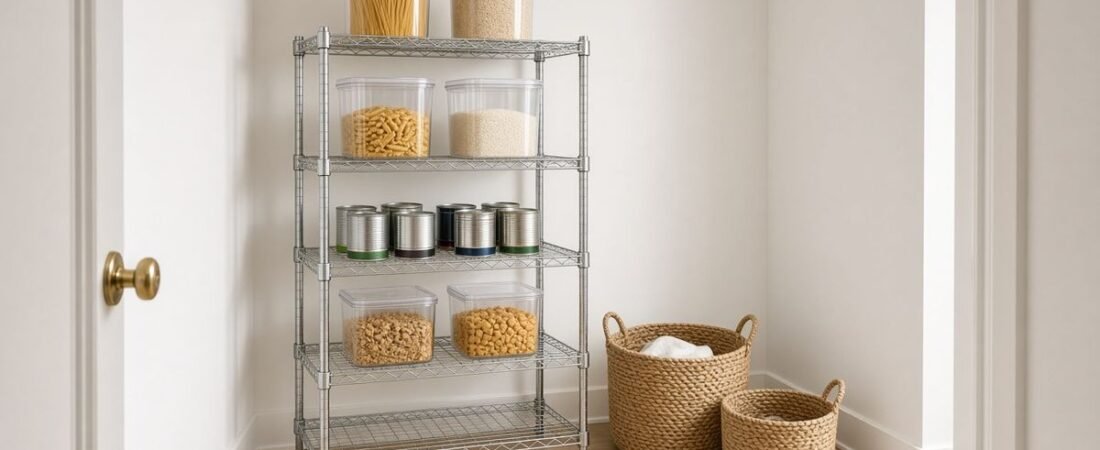
1. Add a Freestanding Wire Shelving Unit
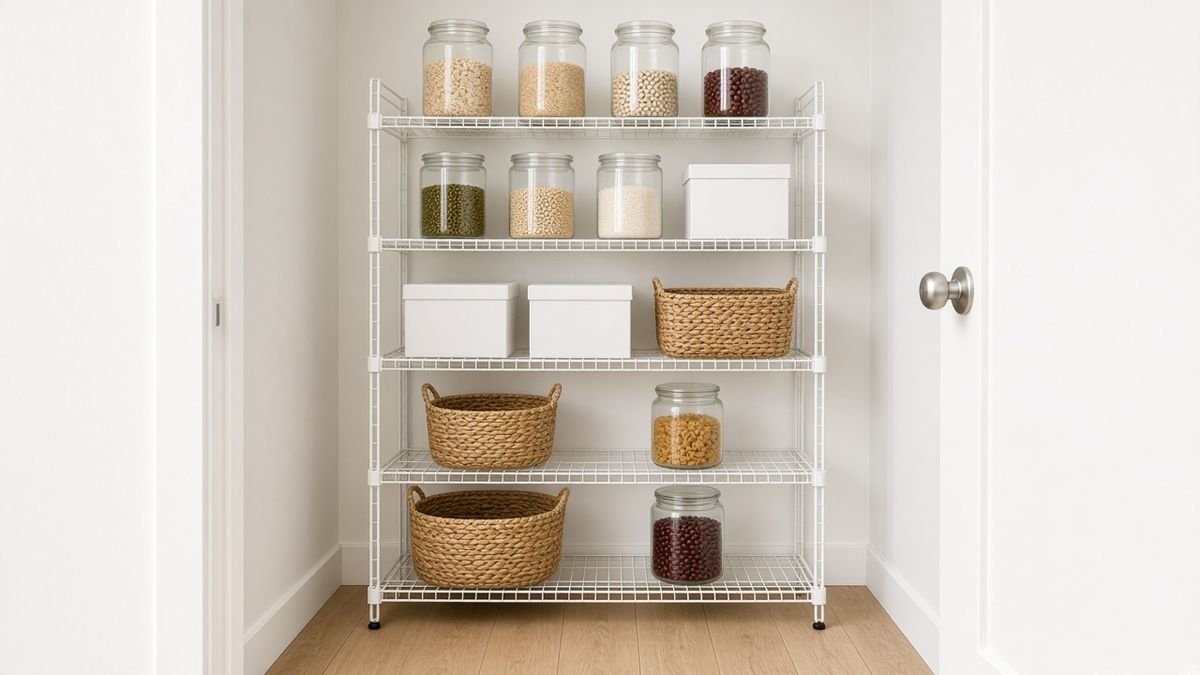
The fastest way to fix a shelfless pantry is to bring your own shelves. A freestanding wire unit needs no drilling, and most have shelves you can move up or down to fit cereal boxes on one level and short cans on another.
When you shop for a freestanding wire shelving unit, compare its width and depth against your measurements, check the weight rating per shelf,. Load the heaviest items on the bottom shelves so the unit stays stable. Small jars can tip on wire, so add a shelf liner or group small items in a bin.
2. Use Clear Stackable Bins on the Floor
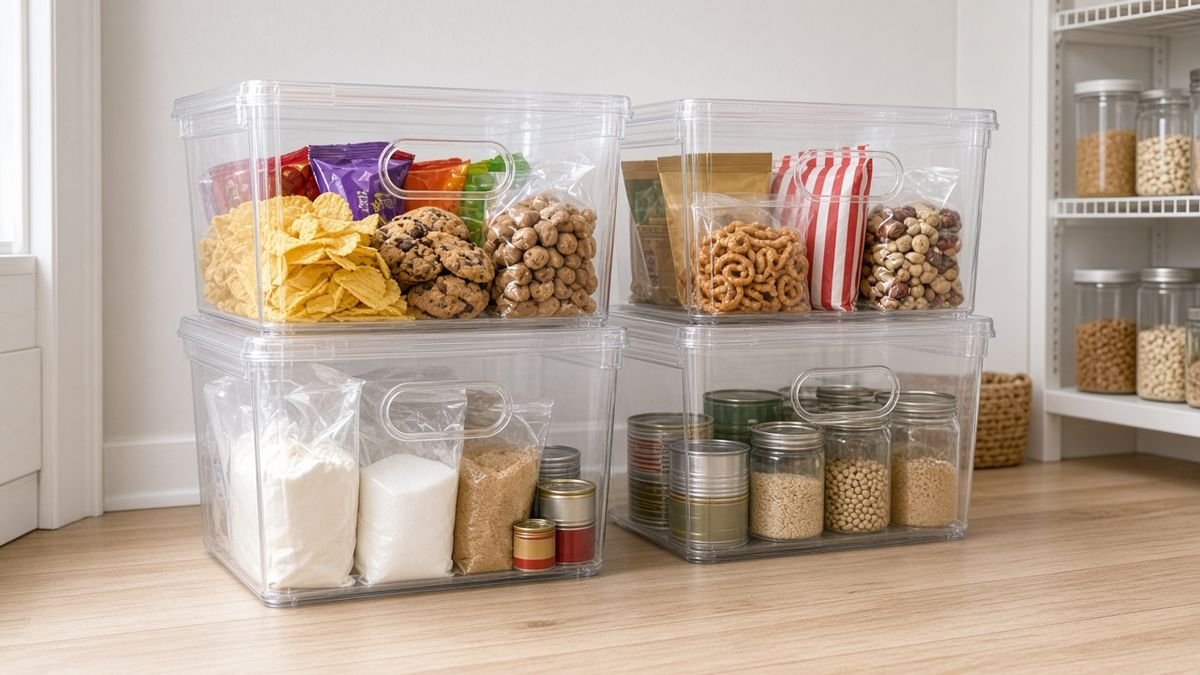
In a pantry with no shelves, the floor is your biggest storage area, but loose bags on the floor turn into clutter fast. Clear stackable bins with handles turn the floor into neat, usable storage. You can see what is inside without unstacking, and the handles make it easy to pull a bin out like a drawer.
Keep stacks to two or three bins high, with the heavier bins on the bottom. Give each bin one job, such as snacks or baking.
3. Hang an Over-the-Door Pantry Organizer
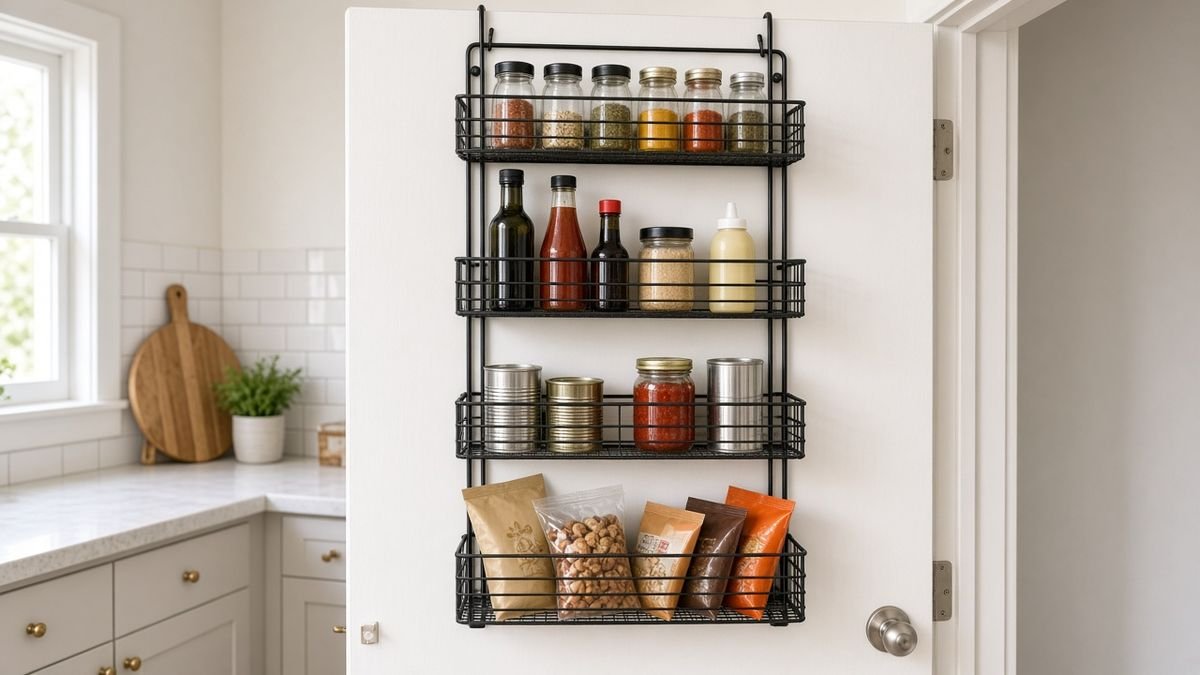
The back of the pantry door is often the most overlooked space in a small kitchen. An over-the-door pantry organizer with adjustable baskets holds spices, sauces, small cans, and snack packets, the small items that get lost on deep shelves.
Before you buy, check two things. First, the hooks need to fit your door thickness and the gap at the top of the frame. Second, measure how deep the baskets are plus the items in them, and make sure that depth still clears anything inside the pantry when the door closes. Put heavier jars in the lower baskets.
4. Fit a Slim Rolling Cart Into a Gap
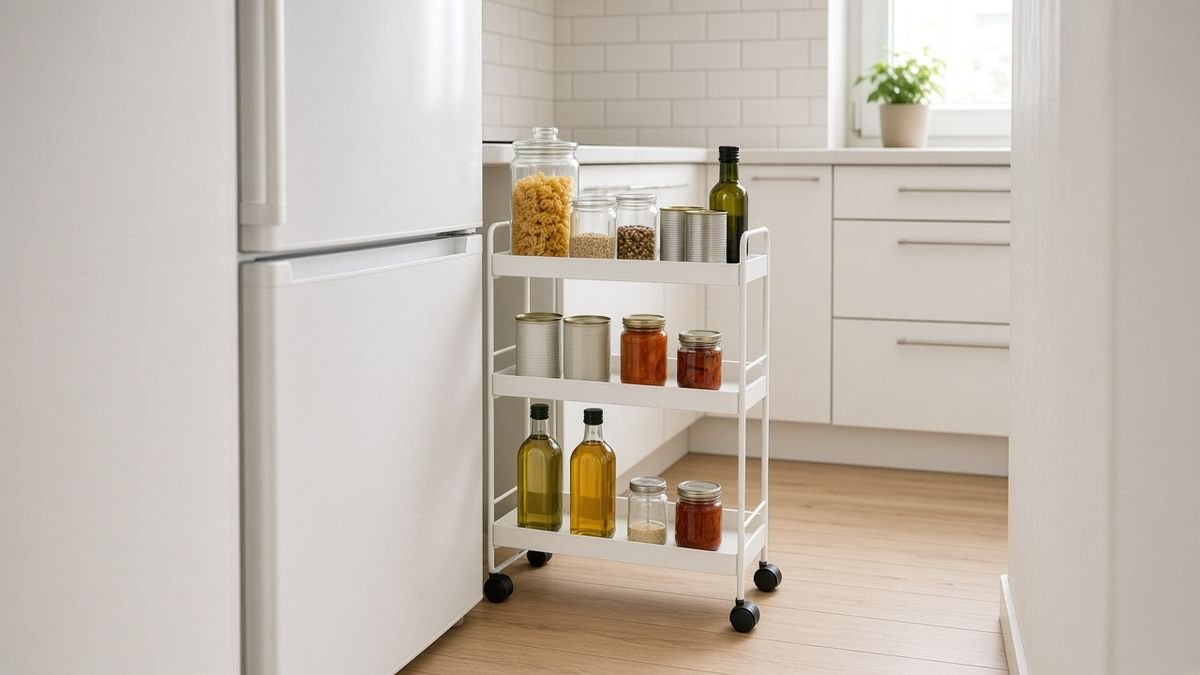
Many small kitchens have a narrow gap beside the fridge, between a shelving unit and the wall, or at the end of a counter. A slim rolling storage cart turns that gap into a pull-out pantry for oils, cans, jars, and spices.
Measure the width, depth, and height of the gap, then choose a cart that is a little narrower so it rolls in and out without scraping. Keep the heaviest items on the bottom tier so the cart does not tip when you pull it out.
5. Decant Dry Goods Into Airtight Containers
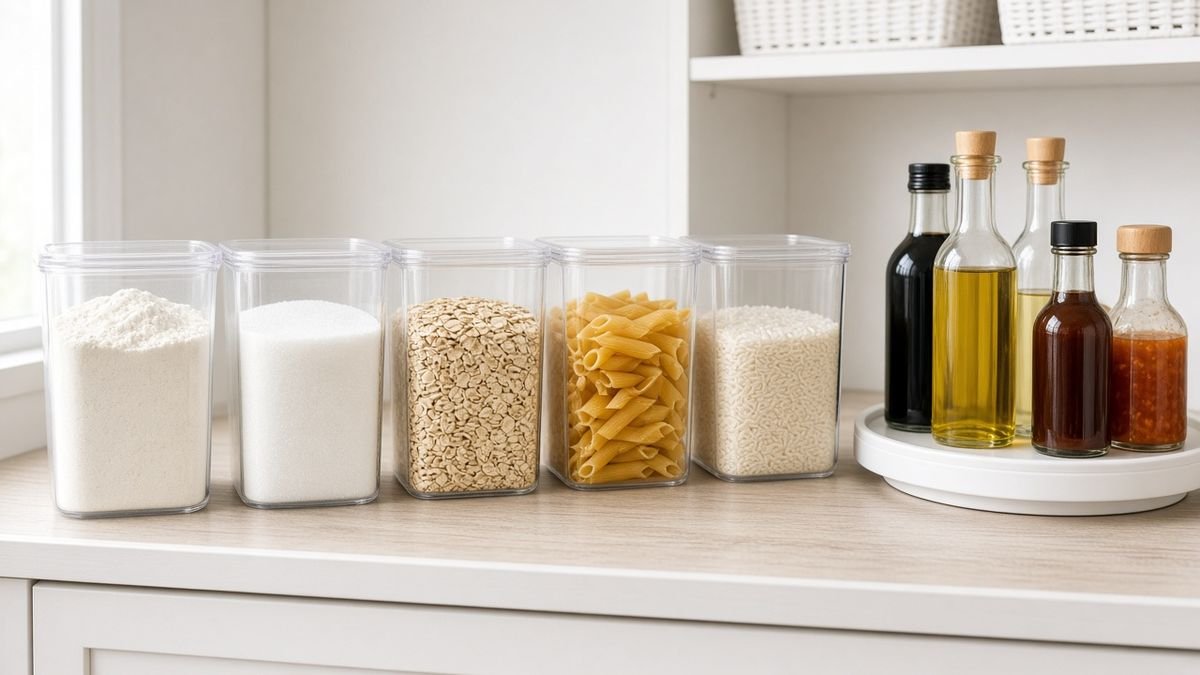
Bulky bags and half-empty boxes waste a lot of space. Moving flour, sugar, oats, rice, pasta, and cereal into airtight food storage containers makes everything easier to see and stack. Square or rectangular containers sit flush against each other and waste less space than round ones, and airtight lids help keep food fresh and pests out.
Label each container with what is inside and the best-by date from the original package.
6. Put a Lazy Susan in the Corners
Corners are hard to reach. A lazy susan turntable lets you spin oils, vinegars, and sauce bottles to the front instead of reaching over everything else. For more ways to use one, see our lazy susan corner cabinet ideas.
7. Use Tension Rods for Light Hanging Storage
A tension rod fits between two side walls without screws. Add S-hooks to hang reusable bags or small baskets of snacks. Tension rods hold by pressure, so check the rod’s rated load, keep what you hang light, and test it before you rely on it.
8. Keep Produce in Breathable Baskets
Potatoes, onions, and garlic are often stored in the pantry. Keep them in breathable baskets, not sealed plastic bins, in a low spot that is cool and dark. Store potatoes and onions in separate baskets.
No Pantry? Kitchen Ideas When You Have No Pantry
Many small apartments have no pantry, but the same ideas still work in a different spot. A bookcase or freestanding shelving unit in a hallway or dining nook can hold food in lidded baskets so it looks tidy. A rolling cart beside the fridge can hold daily cooking items. Backstock can go in a closet in another room. For more small-home storage, read our guide to small space organization ideas for small homes.
Which No-Shelf Solution Fits Your Pantry?
| Solution | Best for | Watch out for |
|---|---|---|
| Freestanding wire shelving | Bare closets and walk-in pantries | Small items can tip on wire; check the weight rating |
| Clear stackable bins | Floor storage, snacks, and bulk items | Bottom bins are harder to reach if stacked too high |
| Over-the-door organizer | Spices, sauces, and packets | Deep baskets can stop the door from closing |
| Slim rolling cart | Narrow gaps beside appliances | Can tip if the top tier is too heavy |
| Airtight containers | Flour, sugar, cereal, pasta, and rice | Upfront cost, and they need labels |
| Lazy susan | Corners and bottles | Leaves some unused space in square corners |
Small Pantry Organization on a Budget
You can set up a shelfless pantry for very little if you buy in layers. Start with free fixes: sort into zones, group like items in boxes you already have, and use up duplicates. Then add one piece at a time, beginning with whichever solves your biggest problem, usually a freestanding shelf or an over-the-door rack. Clear bins and matching containers can come last.
How to Keep a Shelfless Pantry Organized
- First in, first out: put new groceries behind older ones so the older food gets used first.
- Do a monthly reset: spend 10 minutes putting stray items back in their zones and wiping up crumbs.
- Keep a list on the door: write down items as they run low so you always know what to buy.
Frequently Asked Questions
How do you organize a pantry with no shelves?
Measure the space, then add a freestanding shelving unit that fits inside the opening. Use clear bins on the floor, an over-the-door rack for small items, and airtight containers for dry goods.
Can I add shelves to a pantry if I rent?
Yes. Freestanding shelving units, rolling carts, bins, tension rods, and over-the-door racks all work without drilling. If you want built-in shelves, ask your landlord for written permission first, since mounting hardware can leave holes you may be charged to repair.
What depth of shelving works best in a small pantry?
It depends on your closet, so measure first. In general, shallower shelves make it easier to see everything without food getting lost at the back. In a shallow reach-in pantry, a narrow unit with bins you can pull out often works better than a deep unit that blocks the door.
How should I store potatoes and onions in a pantry?
Keep them in a cool, dark spot with good airflow, in breathable baskets rather than sealed containers. Store potatoes and onions in separate baskets, and check them often for anything going soft.
How do you organize a deep pantry with no shelves?
Treat the depth like drawers. Use bins or a slim rolling cart that you can pull out, so nothing gets lost at the back. Put tall items and bulk backups in the back and everyday food in front, and label the front of every bin. A freestanding unit placed against the back wall, with a clear walkway in front, keeps the deep space usable.
Conclusion
A pantry without shelves is a blank space you can set up exactly the way you need. Measure first, sort your food into zones, and then add storage in layers: a freestanding shelving unit for structure, bins for the floor, a rack on the door, and a slim cart for any leftover gaps. Start with the change that fixes your biggest problem, then add the next piece only when you need it. Your small pantry will be easier to use, and you will always know what you have on hand.
You might also like: Under Sink Organization for a Small Bathroom: 12 Ideas That Actually Fit and Maximizing Your Space: Creative Solutions for Small Homes.
Want a simple plan to reset your home? Get the Fresh Start Home Reset Bundle or the ebook Small Space, Calm Life.