
As an Amazon Associate, CozyMorph earns from qualifying purchases. This post may contain affiliate links, which means we may earn a small commission at no extra cost to you.
Get Your Free 7-Day Declutter Checklist
Clear one small space a day in about 15 minutes with our free printable checklist, and get a calmer home by next week. Your laundry closet is a perfect place to start.
A laundry closet is one of the hardest-working spaces in a small home. It is often just 30 inches deep and five feet wide, with bifold doors that hide a washer, a dryer and a pile of detergent bottles balanced on top. There is no room to fold, and the doors barely close.
These laundry closet ideas are built for exactly that setup, whether you have a stacked unit in a narrow hall closet or a side-by-side pair behind two doors. Below you will find the measurements to check first, ten laundry closet organization ideas, a quick comparison table and answers to common questions. If you have a separate laundry room instead, our guide to small laundry room storage ideas covers bigger layouts.
Quick answer: To organize a small laundry closet, use the vertical space first: add shelves or a cabinet above the machines, put a slim rolling cart in the gap beside them, and hang an organizer on the back of the door. Top front-load machines with a countertop for folding, decant detergent into one or two containers, and keep only laundry supplies inside. Measure depth and door clearance before you buy anything.
Measure Your Laundry Closet First
Laundry closets leave very little margin. A shelf that sticks out two inches too far can stop the doors from closing, and a cart that is half an inch too wide will not slide into the gap. Use this sizing guide before you shop.
| Measure this | Why it matters | Typical size |
|---|---|---|
| Closet depth | Front-load machines plus hoses need room behind them. | Plan for at least 32 in.; many closets are 30 to 36 in. deep |
| Width for side-by-side | Two machines plus a little air on each side. | About 56 in. minimum; 60 to 66 in. is comfortable |
| Width for a stacked unit | One machine plus space for a slim cart or shelf. | At least 30 in.; 36 to 40 in. lets you add a 6 in. cart |
| Gap beside the machines | Decides the width of a rolling cart. | Slim carts start at about 5 to 7 in. wide |
| Clearance above the machines | Top-load lids need room to open fully. | Mount shelves 20 to 24 in. above a top-loader; 12 in. above front-loaders |
| Door swing and fold | Door organizers and shelves must not block the doors. | Bifold doors stack about 4 to 6 in. deep when open |
Also check the outlet, water valves and dryer vent before you mount anything. You need to reach the valves in an emergency, and the dryer vent needs a clear, uncrushed path to the wall.
10 Laundry Closet Organization Ideas
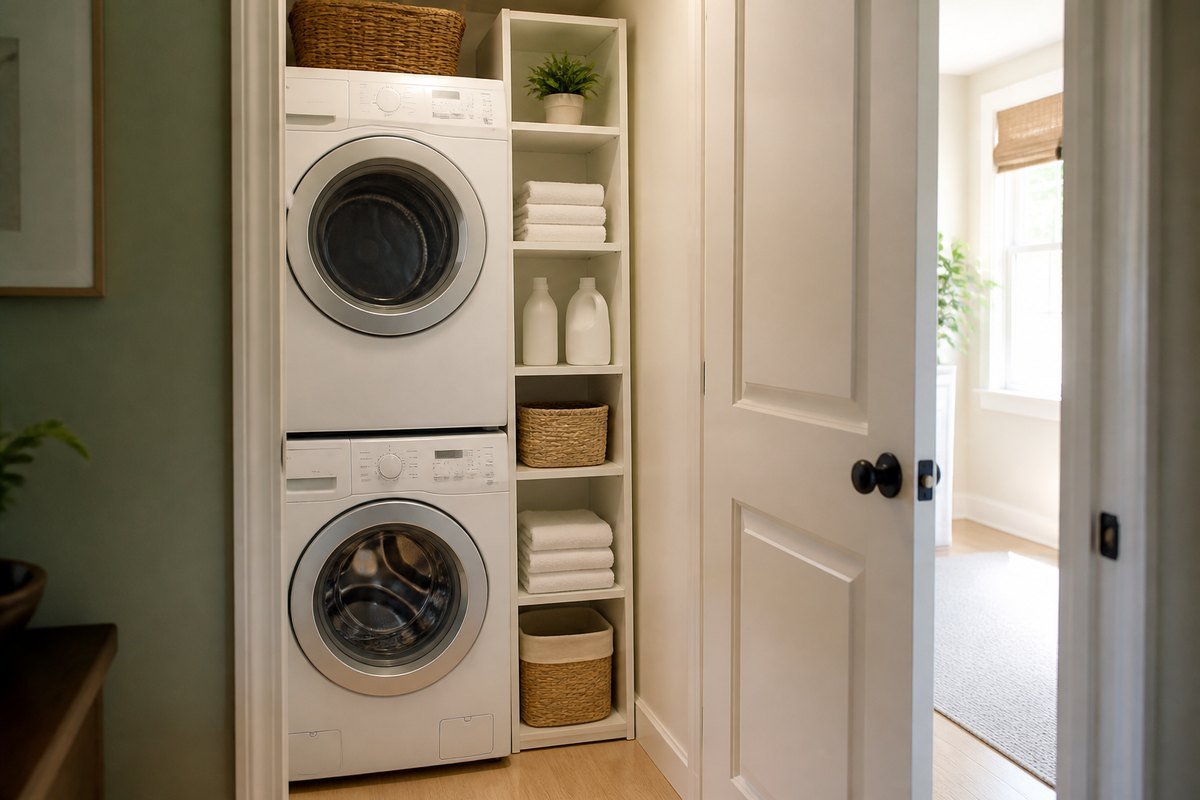
1. Build Up Beside a Stacked Washer and Dryer
If your machines are stacked, the space beside them is your best storage spot. A narrow floor-to-ceiling shelf unit, 10 to 12 inches wide, can hold detergent, clean towels and a basket of rags without adding any depth. Put the heaviest bottles on a low shelf and lighter items like extra hangers up high. If your machines are not stacked yet and they are a matching front-load pair, a washer and dryer stacking kit from the manufacturer can free up a whole half of the closet. Not every model can be stacked, so check your manual.
2. Add Shelves Above the Machines
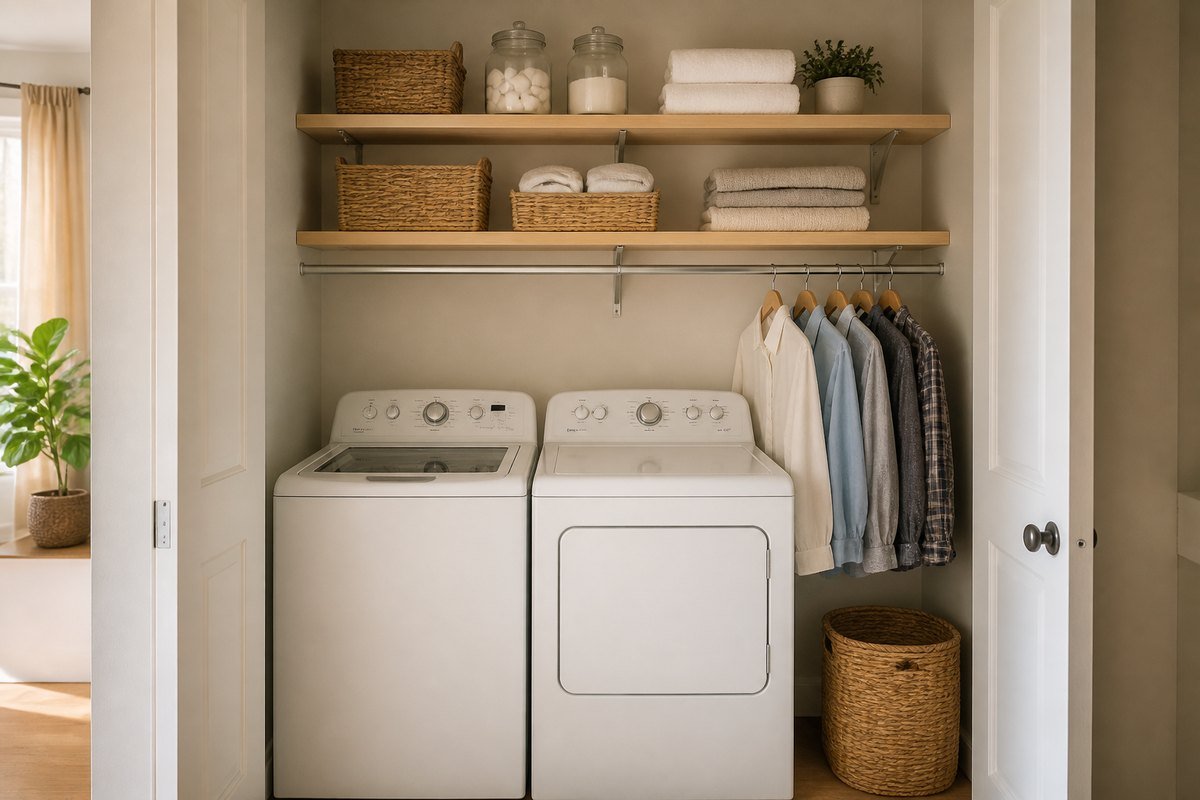
The wall above a washer and dryer is usually empty. An over the washer and dryer storage shelf or two simple wall shelves turns that space into a full pantry for laundry supplies. With top-load machines, mount shelves high enough for the lids to open completely and keep the bottom shelf for things you use every week. A closet rod or tension rod under the shelf gives you a place to hang shirts straight from the dryer.
3. Put a Countertop Over Front-Load Machines
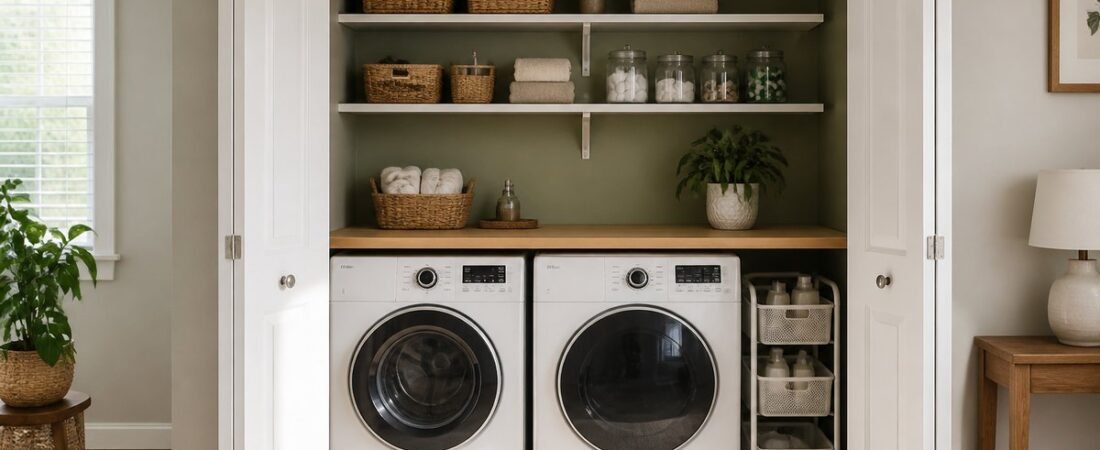
A side-by-side pair of front-loaders gives you a ready-made base for a folding surface. A washer and dryer countertop or a cut piece of butcher block sits across both machines and stops socks and lint from falling down the back. Leave a small gap at the back for the hoses and vent.
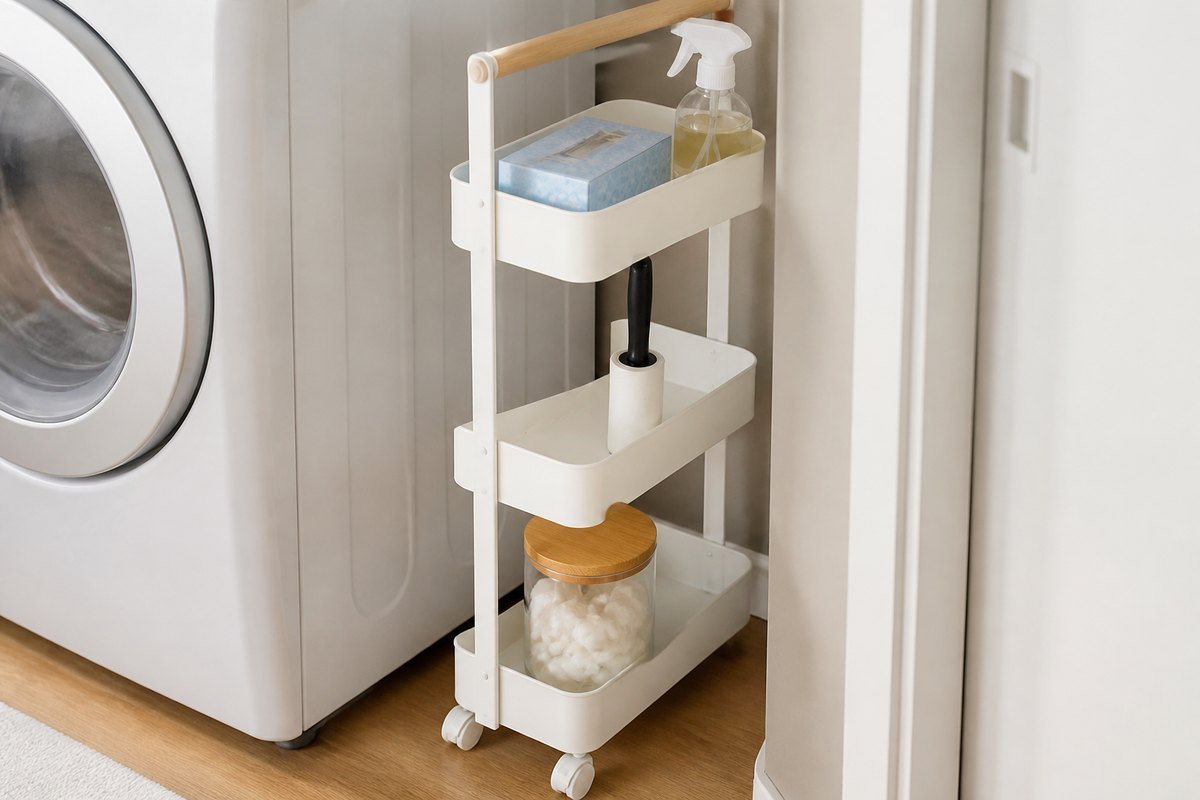
4. Slide a Slim Rolling Cart Into the Gap
Most laundry closets have a 6 to 10 inch gap between the dryer and the wall. A slim rolling cart fits there and pulls out when you need it. Use it for dryer sheets, stain remover, a lint roller and spare pods. Choose one with a handle and lipped shelves, so nothing falls off as you roll it.
5. Use the Back of the Closet Door
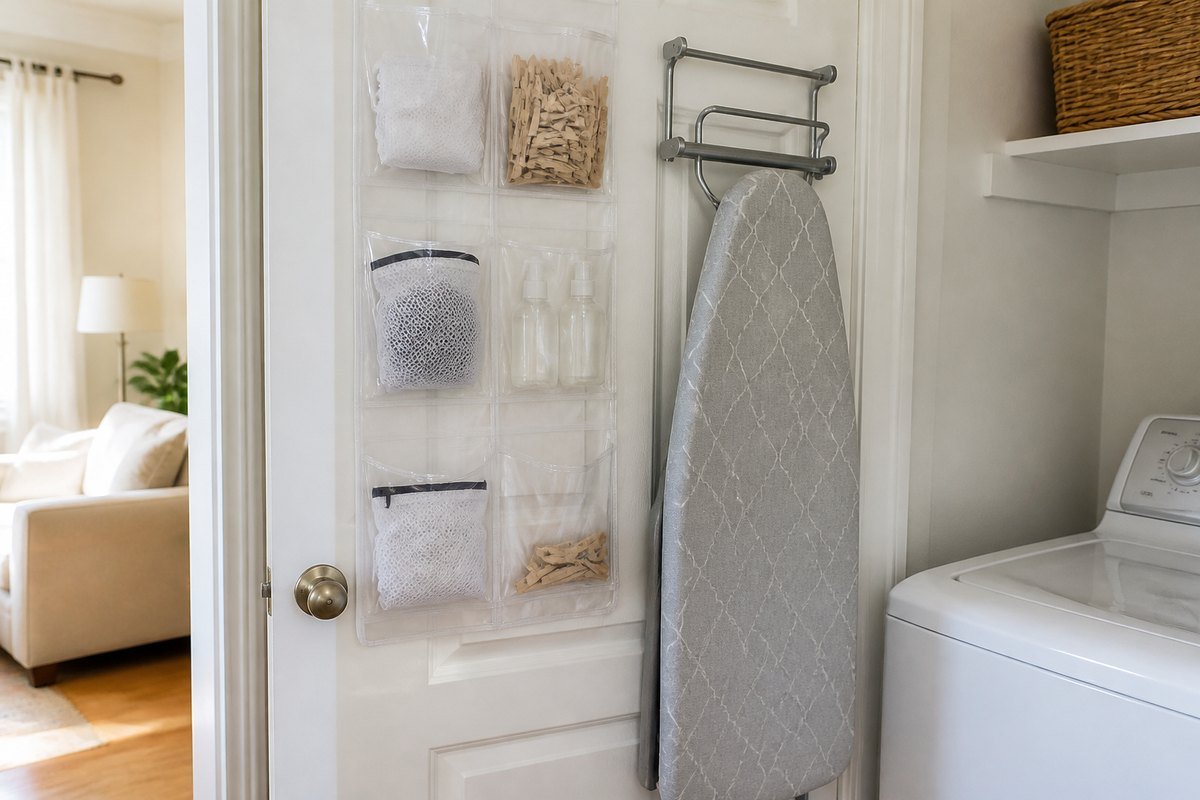
Laundry closet doors are free vertical storage. An over the door organizer with clear pockets holds small items like clothespins, mesh wash bags, stain sticks and sewing kits. An ironing board holder on the same door keeps the board off the floor. For bifold doors, choose thin adhesive hooks or a narrow organizer so the panels can still fold. Our over the door storage ideas guide has more options.
6. Add a Wall-Mounted Drying Rack
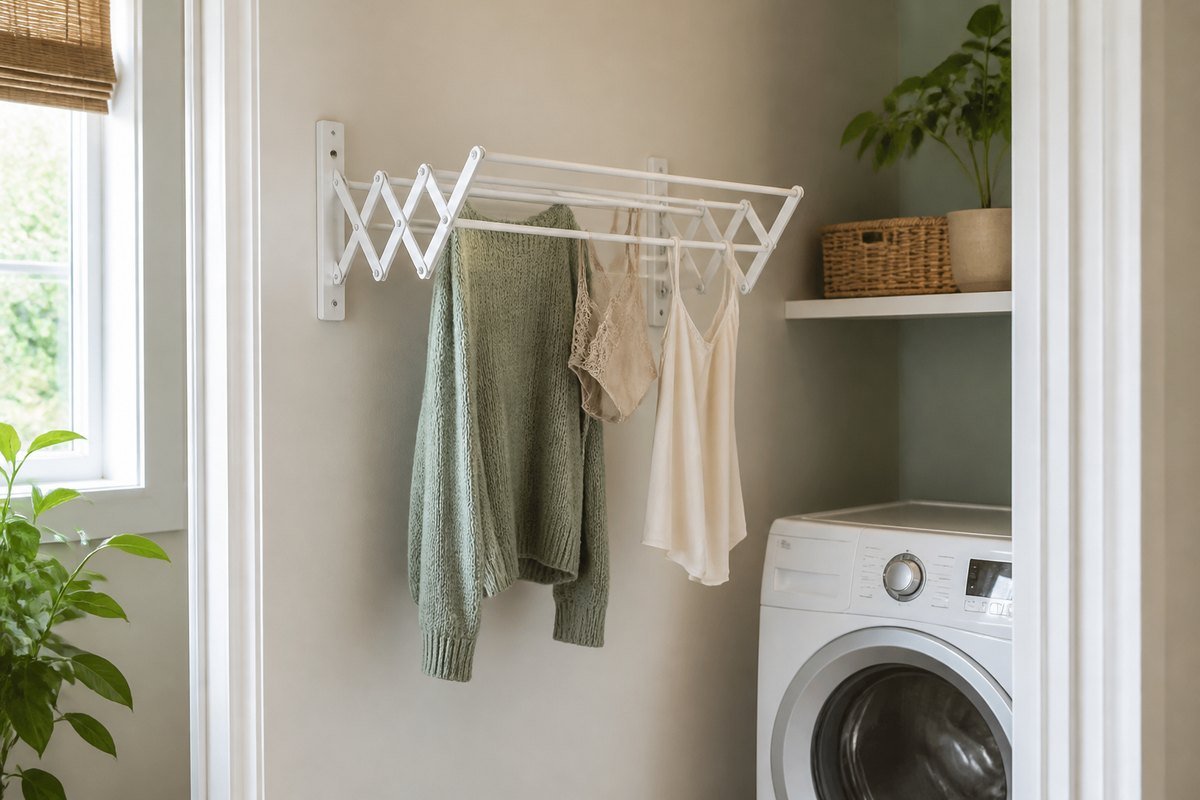
Air-drying sweaters and delicates is hard in a closet with no floor space. A wall-mounted drying rack folds flat against the side wall when you are done and pulls out to hold a full load of delicates. Mount it on a side wall where it will not block the machine doors.
7. Decant Detergent Into One or Two Containers
Big detergent jugs take up a surprising amount of shelf space. Pour liquid detergent into a dispenser with a spout, and move pods and powders into clear jars with lids. Keep just one or two containers out, and store the refill bottle on the top shelf or in a hall closet. Keep pods out of reach of small children.
8. Sort Laundry With Baskets That Fit the Space
Many laundry closets have no room for a three-bin sorter. Instead, use narrow baskets that fit on a shelf or on top of the countertop, one for darks and one for lights, and keep the main hamper in each bedroom.
9. Light the Closet Properly
Most laundry closets have one dim ceiling light or none at all. Rechargeable motion-sensor LED strips under a shelf make it easier to spot stains and read care labels, and they need no wiring, which is great for renters.
10. Choose Doors That Work for You
If you are allowed to change the doors, swap heavy bifolds for a curtain on a tension rod or ceiling track. A curtain opens fully and needs no swing space. Louvered doors are another good choice because they let warm, damp air escape after a dryer load.
Which Laundry Room Space Saver Fits Your Closet?
| Idea | Best for | Space needed | Honest drawbacks |
|---|---|---|---|
| Tall slim shelving | Stacked units | 10 to 12 in. beside the machines | Can feel crowded; must be anchored to the wall |
| Shelves above machines | Any closet | Empty wall above the machines | Top-loaders need extra clearance; usually needs drilling |
| Countertop | Side-by-side front-loaders | Width of both machines | Needs careful measuring; can trap heat and lint at the back |
| Slim rolling cart | Gaps beside the dryer | 5 to 10 in. gap | Small capacity; cheap carts can tip |
| Door organizer | Hinged doors | Back of the door | Hard to use on bifold doors; heavy items make doors sag |
| Wall drying rack | People who air-dry | Side wall space | Takes space while open; needs airflow |
Reset Your Whole Home, One Room at a Time
Once your laundry closet is sorted, keep the momentum going. The Fresh Start Home Reset Bundle is a $9 printable with simple checklists to help you declutter and organize every room, from the laundry closet to the kitchen.
Tips to Keep a Laundry Closet Organized
- Keep it laundry-only. A laundry closet fills up fast with mops, cleaning sprays and random boxes. Give those items a home elsewhere.
- Store by frequency. Detergent and softener at arm level, spare supplies up high, rarely used items on the top shelf.
- Do a weekly 5-minute reset. Wipe the top of the machines, empty the lint trap, and return stray socks to their owners.
- Clear the floor. Anything on the closet floor blocks the doors. Use carts, shelves and hooks so the floor stays empty.
- Think whole-home. For more ways to free up space across a small home, see our creative solutions for small homes.
Frequently Asked Questions
How do I organize a small laundry closet?
Start by measuring the depth, width and door clearance. Then add shelves above the machines, a slim rolling cart in the gap beside them, and an organizer on the back of the door. Decant detergent into one or two containers and keep only laundry supplies inside the closet.
How deep should a laundry closet be?
Most front-load washers and dryers are 27 to 32 inches deep, and you need a few extra inches behind them for hoses and the dryer vent. Plan for a closet at least 32 inches deep, and 36 inches is more comfortable if you want to add a countertop.
What can I put on top of my washer and dryer in a closet?
With front-loaders, a countertop or a cut piece of butcher block makes a great folding surface. With top-loaders, keep the lids clear and use shelves mounted high on the wall instead.
Can you put a stackable washer and dryer in a closet?
Yes, if the closet is at least 30 inches wide and about 32 inches deep, with enough height for both machines plus a little air space. You need a matching stacking kit, a proper dryer vent and enough ventilation, often provided by louvered doors.
Conclusion
A small laundry closet does not have to be a jumble of bottles and lost socks. Measure first, then use the space you already have: the wall above the machines, the gap beside them and the back of the door. Add a countertop or a slim shelf unit if you have the room, decant your detergent and keep the closet for laundry only.
Want a calmer home beyond the laundry closet? Our ebook Small Space, Calm Life ($9.99) walks you through decluttering and organizing a small home step by step, and the Fresh Start Home Reset Bundle ($9) gives you printable checklists for every room.