As an Amazon Associate, CozyMorph earns from qualifying purchases. This post may contain affiliate links, which means we may earn a small commission at no extra cost to you.
Small apartment closets have a way of filling up overnight. One day there’s room to slide hangers around, the next you’re wrestling a sweater out from between two coats. If you rent, you can’t knock down a wall or build a custom closet. But you can change what goes into it.
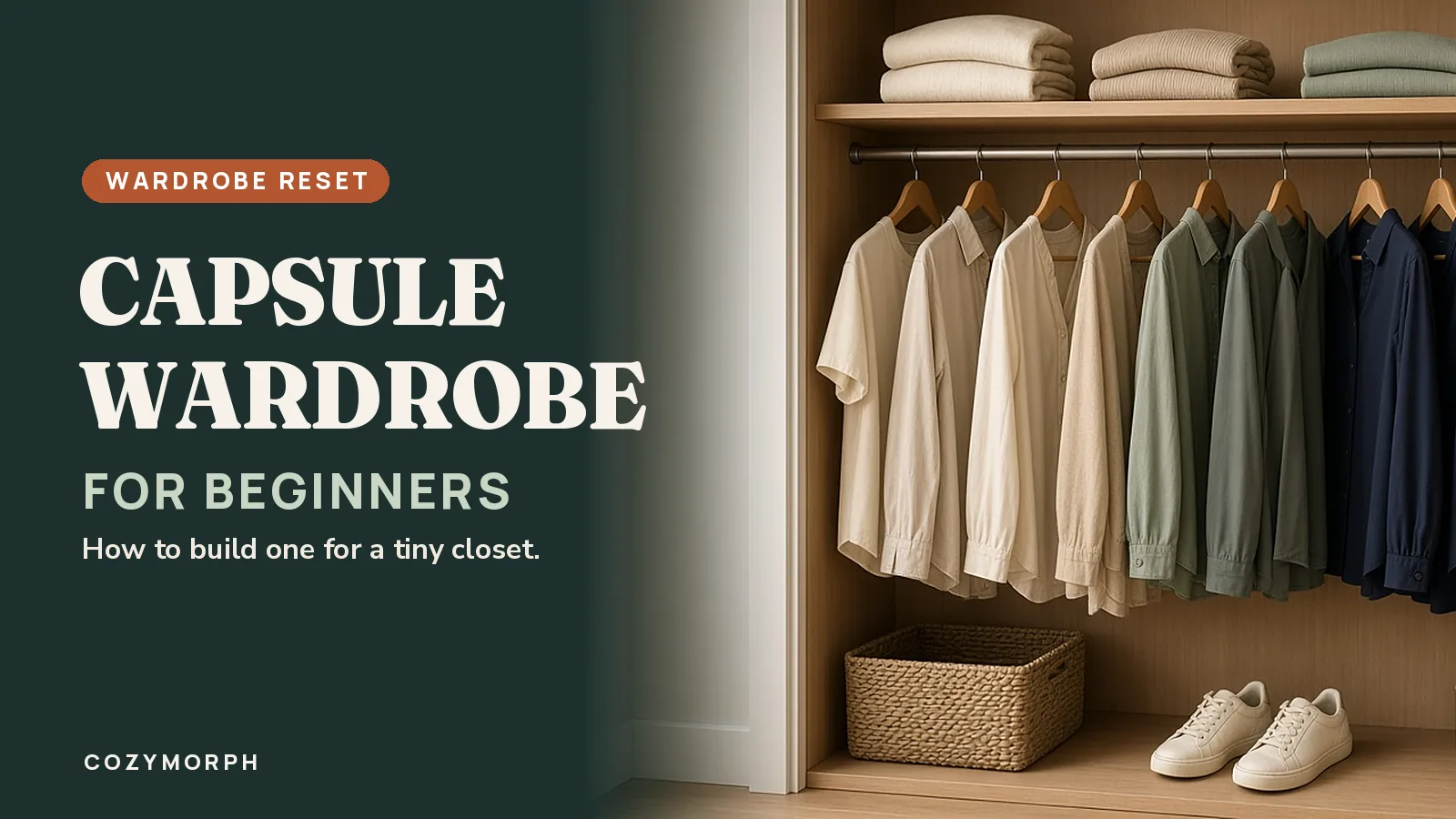
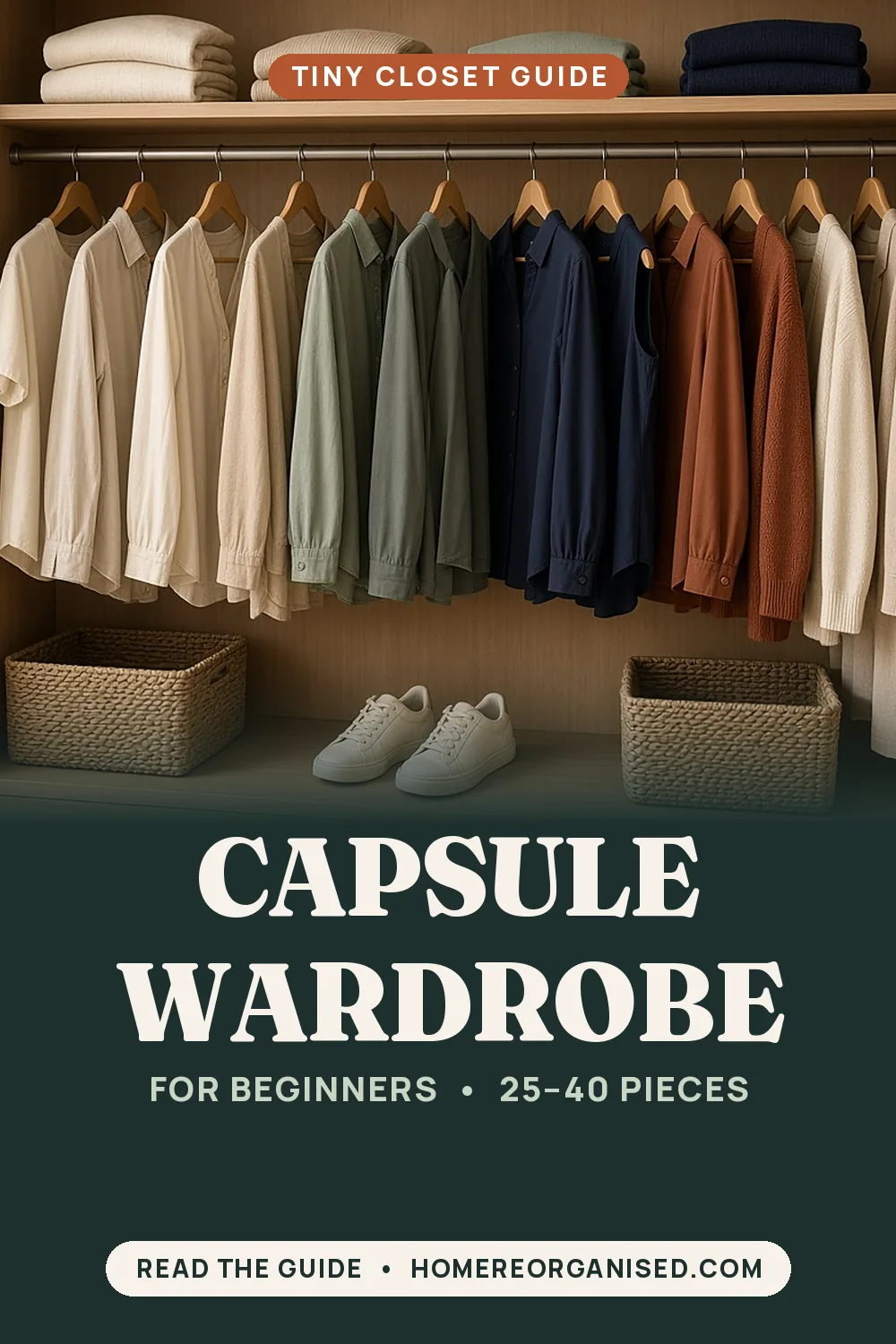
A capsule wardrobe is one of the simplest ways to do that. This guide to building a capsule wardrobe for beginners is made for tiny closets: how to choose fewer, better pieces, how many items to aim for, and how to set up a small closet so every outfit is easy to see and grab.
Quick Answer
A capsule wardrobe is a small collection of clothes that all work well together, so you can make lots of outfits from fewer pieces. To build one for a tiny closet, empty the closet, keep the pieces you wear and love, pick a simple color palette, and aim for roughly 25 to 40 items per season (shoes and outerwear included or not, your choice). Store off-season clothes under the bed, use slim matching hangers, and add a second hanging rod to double your space.
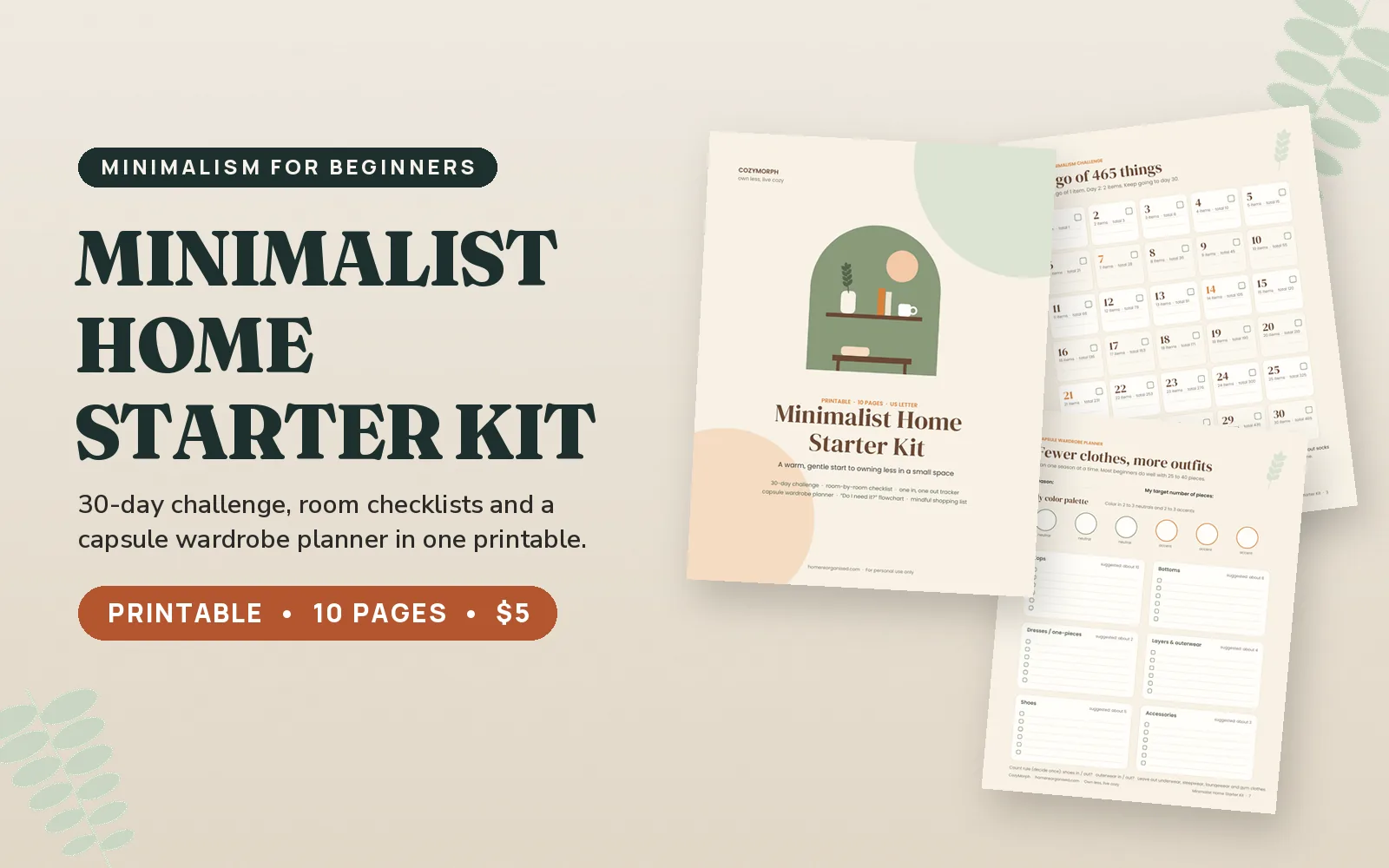
Ready to start? The CozyMorph Minimalist Home Starter Kit gives you a 30-day challenge, room checklists and a capsule wardrobe planner in one printable.
What Is a Capsule Wardrobe?
A capsule wardrobe is a curated set of versatile clothing where most tops go with most bottoms. The idea goes back to the 1970s, when London boutique owner Susie Faux used the term for a small core of timeless pieces, and designer Donna Karan helped popularize it in the 1980s with a collection of mix-and-match workwear.
Today, the term usually means a seasonal wardrobe of a set number of pieces. One well-known version is Project 333 by Courtney Carver: 33 items, including accessories and shoes, worn for three months. But you don’t need to follow a strict formula. A capsule wardrobe for a small closet just needs to be small enough to fit comfortably and flexible enough to dress you for your real life.
Why a Capsule Wardrobe Is Perfect for a Tiny Closet
- Everything fits. When you own fewer clothes, you can see all of them at once. No more forgotten pieces buried at the back.
- Mornings get faster. Fewer choices, all of which go together, means less time standing in front of the closet.
- Laundry is easier. A small, coordinated wardrobe is easier to wash, fold, and put away.
- You spend more intentionally. Once you know what’s in your capsule, it’s clear what’s missing and what you don’t need.
- It fits a minimalist small apartment. A capsule wardrobe is minimalism you practice every day. If you’re new to the idea, start with our guide to minimalism for beginners in a small apartment.
How Many Pieces Should a Small Capsule Wardrobe Have?
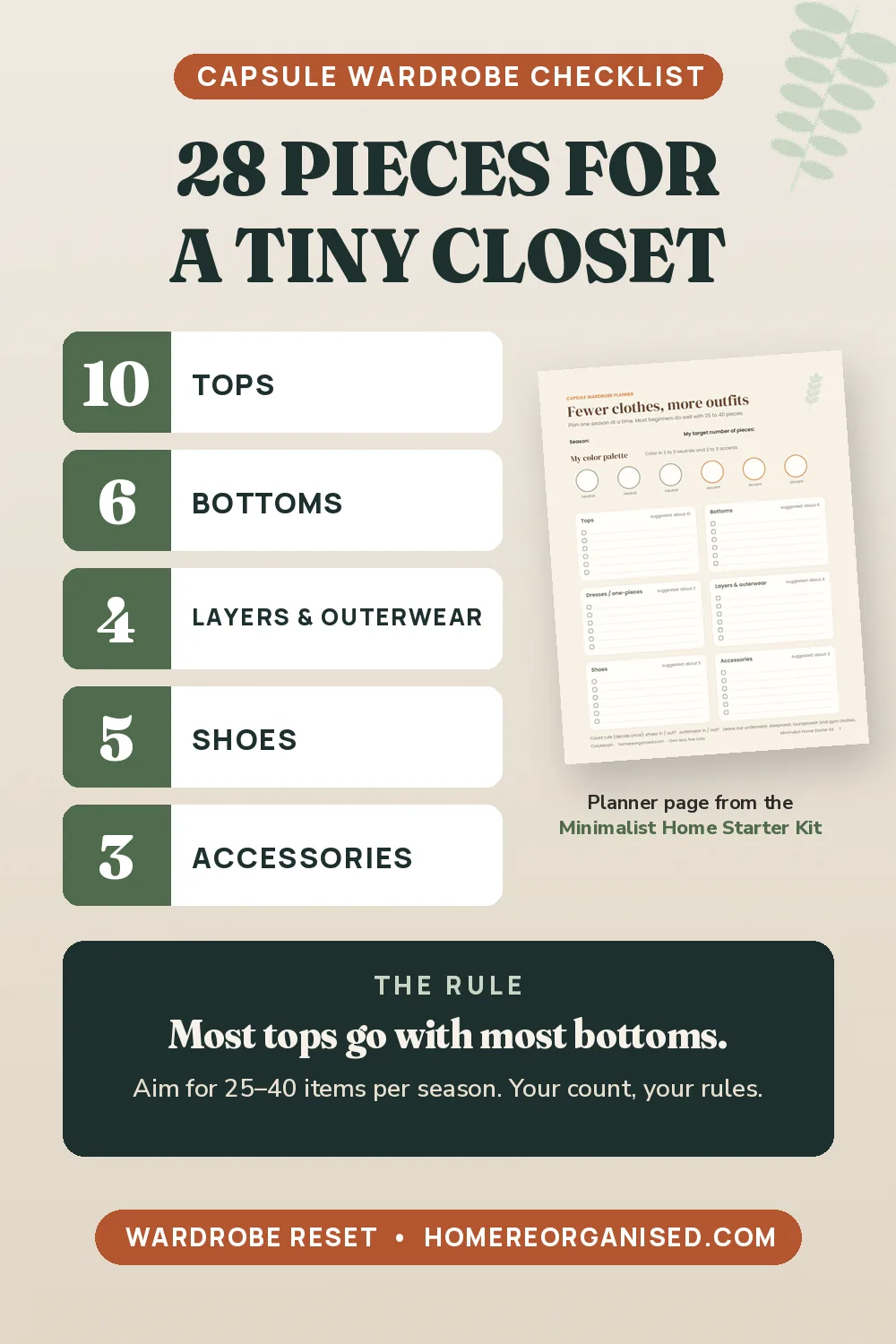
There’s no single right number, but these ranges are a good starting point for a tiny closet:
- Mini capsule (15 to 20 items): Great for travel, a very small reach-in closet, or anyone who loves a uniform.
- Standard capsule (25 to 35 items): Enough variety for work and weekends in one season. A good fit for most beginners.
- Relaxed capsule (35 to 45 items): Useful if you have a dress code at work, or need clothes for very different activities.
Decide early whether you’re counting shoes, outerwear, workout clothes, and accessories. Most people leave out underwear, sleepwear, loungewear, and gym clothes. Pick a rule and stick with it for one season, then adjust.
How to Build a Capsule Wardrobe Step by Step
Step 1: Empty the closet completely
Take everything out and lay it on the bed. Yes, everything. Seeing it all together shows you how much you own and which items you actually reach for. Wipe the closet down while it’s empty.
Step 2: Sort into four piles
- Love and wear: Fits now, you feel good in it, you’ve worn it this year.
- Maybe: You like it but rarely wear it.
- Off-season: Good pieces that belong to another time of year.
- Let go: Doesn’t fit, is damaged, or you haven’t worn it in a year.
Put the “maybe” pile in a box with a date written on it. If you haven’t missed anything in that box after 90 days, donate it without opening it.
Step 3: Look at how you really live
Your capsule should match your week, not your dream week. If you work from home four days a week, you need more comfortable everyday pieces than blazers. Write down what you do in a typical week (work, errands, workouts, evenings out) and make sure your capsule covers each one.
Step 4: Choose a simple color palette
Mix-and-match only works if colors play nicely. A simple formula:
- 2 to 3 base neutrals for bottoms, outerwear, and shoes (for example navy, camel, and black, or brown, cream, and denim).
- 2 to 3 accent colors for tops and accessories (for example sage, rust, or soft blue).
Look at your “love and wear” pile. Your palette is probably already there.
Step 5: Build your core list
Here’s a sample 30-piece fall and winter capsule. Swap pieces freely to suit your climate, job, and style:
- Tops (10): 3 plain tees or long-sleeve tees, 2 button-down shirts or blouses, 3 sweaters, 1 cardigan, 1 dressier top
- Bottoms (6): 2 pairs of jeans, 1 pair of tailored pants, 1 pair of casual pants, 1 skirt, 1 pair of comfortable knit pants
- Dresses or one-pieces (2): 1 everyday, 1 dressier
- Layers and outerwear (4): 1 warm coat, 1 light jacket, 1 blazer or overshirt, 1 rain layer
- Shoes (5): sneakers, boots, flats or loafers, one dressier pair, weather shoes
- Accessories (3): 1 scarf, 1 everyday bag, 1 belt
Step 6: Test it with outfits
Before you call it done, make 10 outfits from what’s in your capsule. If one item only works with one other piece, consider swapping it for something more flexible. A quick photo of each outfit on your phone gives you a ready-made “menu” on busy mornings.
Step 7: Fill gaps slowly
Write down what’s missing, and buy one piece at a time. Choose good fabrics and fits that will last several seasons. A capsule wardrobe isn’t a reason for a shopping spree; it’s a reason to stop buying things you won’t wear.
How to Organize a Tiny Closet for Your Capsule
Once your capsule is chosen, set up the closet so every piece is visible and easy to put back. These ideas are renter-friendly, with no drilling required.
Use slim, matching hangers
Bulky plastic and wooden hangers eat rod space. Slim velvet hangers take up less room and stop silky tops from sliding off. Matching hangers also make a tiny closet look calmer.
Add a second hanging rod
Most of your capsule (tops, shirts, folded pants) is short. A hanging closet double rod hooks onto your existing rod and creates a second row underneath, roughly doubling your hanging space in the section you use it.
Add hanging shelves for folded knits
Sweaters can stretch on hangers. A hanging closet organizer with shelves holds folded knits, jeans, and tees without needing a dresser.
Use the door
The back of the closet door is free real estate. An over-the-door hook rack holds tomorrow’s outfit, bags, scarves, or belts.
Rotate off-season clothes out
Your closet should only hold this season’s capsule. Fold the rest into under-bed clothes storage bags and swap them over when the weather changes. It’s a good moment to re-check what you actually wore last season, too.
Arrange by category, then color
Hang tops together, then bottoms, then dresses and layers, light to dark within each group. You’ll see gaps and repeats at a glance.
Turn hangers backwards
At the start of the season, hang everything with the hook facing out. When you wear something, hang it back the normal way. At the end of the season, anything still backwards is a candidate to let go.
Keeping Your Capsule Small Over Time
- Follow the one in one out rule. When a new piece comes in, a similar one leaves.
- Do a 15-minute closet check each season. Remove what’s worn out, note what’s missing.
- Keep a donation bag in the closet. Drop items in the moment you notice they don’t work anymore.
- Shop with a list. Only buy pieces that fill a real gap in your capsule and fit your palette.
- Care for what you have. Wash on gentle, fold knits, and fix small things like loose buttons quickly.
Capsule Wardrobe Mistakes Beginners Make
- Copying someone else’s list. A capsule from an office worker in a cold city won’t suit a student in a warm one.
- Buying a whole new wardrobe. Start with what you own. Most people already have the basics.
- Being too strict. If 33 items feels stressful, try 40. The goal is ease, not a perfect number.
- Forgetting your real life. Make sure you have enough of the clothes you wear most, like weekend or work-from-home outfits.
- Skipping the closet setup. Even a great capsule feels cluttered in a messy closet. Spend an hour setting it up.
Capsule Wardrobe Checklist for Beginners
Use this list to build your first capsule in one weekend:
- Empty the closet and sort into keep, maybe, donate, and repair
- Decide what counts (shoes, outerwear, accessories) and pick a number, such as 25 to 35
- Choose 2 or 3 base colors and 1 or 2 accent colors
- Build your core list: tops, bottoms, layers, shoes, accessories
- Test it by making at least 10 outfits
- Store off-season pieces under the bed
- Switch to slim matching hangers and turn them backwards
- Write down real gaps and fill them slowly
Want it on paper? The Minimalist Home Starter Kit includes a capsule wardrobe planner.
Put It All Together
A capsule wardrobe is a quick win for anyone trying minimalism in a small space: one closet, one weekend, and a noticeably calmer morning routine. If you want to keep going through the rest of your home, grab the free 7-Day Declutter Checklist (day four is the closet), or use the planners in the Fresh Start Home Reset Bundle. Our ebook Small Space, Calm Life covers closets, kitchens, and every corner of a small home.
For more ways to free up space, see where to store holiday decor in a small apartment and our small space-saving ideas for students.
Ready to start? The CozyMorph Minimalist Home Starter Kit gives you a 30-day challenge, room checklists and a capsule wardrobe planner in one printable.
Frequently Asked Questions
What is a capsule wardrobe in simple terms?
It’s a small set of clothes that all go together, so you can make many outfits from fewer pieces. Most people build one per season.
How many items are in a capsule wardrobe for beginners?
Most beginners do well with 25 to 40 items per season. Decide upfront whether to count shoes, outerwear, and accessories, and leave out underwear, sleepwear, and workout clothes.
How do I build a capsule wardrobe from what I already own?
Empty your closet, keep the pieces you wear and love, choose a color palette from those favorites, and build outfits. Only buy new pieces to fill real gaps.
How do I fit a capsule wardrobe in a tiny closet?
Store off-season clothes under the bed, use slim matching hangers, add a second hanging rod, put folded knits on hanging shelves, and use the back of the door for accessories.
Is a capsule wardrobe cheaper?
It can be. You’ll buy fewer items and wear each one more often. Some people spend a little more per piece on better quality, but buy far less overall.
Can men or students use a capsule wardrobe?
Yes. The same steps work for anyone: keep what you wear, pick a palette, choose versatile basics, and set up your closet so everything is visible.
Is a capsule wardrobe worth it?
For most people in a small space, yes. You get a closet that actually fits, faster mornings because most pieces go together, and fewer impulse buys. It’s not about owning as little as possible. If a strict number stresses you out, try a relaxed capsule for one season, notice what you really reach for, and adjust from there.
How do I build a capsule wardrobe on a budget?
Start with what you already own, because most beginners have the core of a capsule in their closet. Choose your palette from the pieces you wear most, then make a short list of true gaps. Fill them slowly, one or two items at a time, and look secondhand or wait for sales. Don’t buy a whole new wardrobe at once.