
As an Amazon Associate, CozyMorph earns from qualifying purchases. This post may contain affiliate links, which means we may earn a small commission at no extra cost to you.
Get Your Free 7-Day Declutter Checklist
Clear one small space a day in about 15 minutes with our printable plan, and get a calmer home by next week.
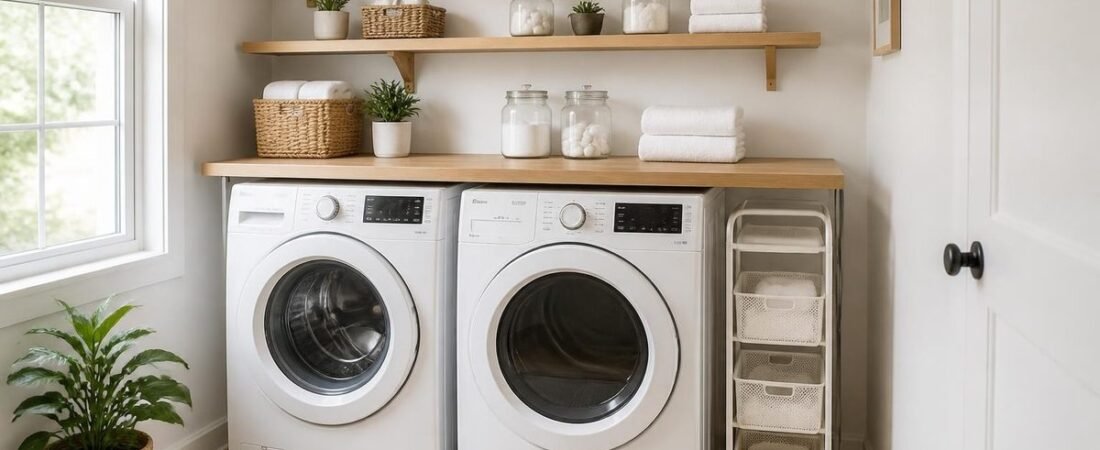
A small laundry room usually has the same problem: two big machines take up almost all of the floor, and everything else ends up piled on top of them. Detergent, the drying rack, and the ironing board all fight for the same few square feet.
This guide is all about storage. We focus on where to put things: above the machines, in the gaps beside them, on the walls, behind the door, and inside a laundry closet. You will also find the measurements to take before you buy anything, so your new storage actually fits.
Quick Answer
The best small laundry room storage ideas use space you are not using yet. Add an over-the-washer shelf or wall shelves for supplies, slide a slim rolling cart into the gap between the washer and dryer, fold laundry on a wall-mounted drying rack, hang the ironing board on a wall or door, and use an over-the-door organizer for small items. If your machines are front-load models made to stack, a stacking kit frees up a full machine footprint of floor space.
Measure First: A Small Laundry Room Sizing Guide
Laundry storage has to work around hoses, vents, outlets, and doors that swing. Before you shop, grab a tape measure and write down these numbers:
- Machine width, depth, and height: many full-size washers and dryers sold in the US are about 27 inches wide, but depth and height vary a lot by model. Check the spec sheet or measure your own.
- Clearance above the machines: measure from the top of the machines to the ceiling. If you have a top-load washer, open the lid all the way and measure from the top of the open lid, since a shelf must sit above that point.
- The gap between or beside the machines: measure width, depth, and height. Narrow gaps of just a few inches are common, so measure at the front and the back.
- Space behind the machines: hoses, the dryer vent, and outlets need room. Do not push storage into this space or crush the vent hose.
- Door thickness and swing: for an over-the-door organizer, check how thick the door is and the gap at the top of the frame, then make sure the door still closes with the organizer loaded.
Always follow the clearances in your washer and dryer manuals. They list how much space each machine needs for airflow and service, and those numbers matter more than any general guide.
Quick sizing guide
| Your space | Storage that usually fits |
|---|---|
| Laundry closet with bifold doors | Shelf or cabinet above the machines, door organizer, slim cart |
| Side-by-side machines in a narrow room | Over-the-washer shelving, wall rack, rolling cart in the gap |
| Stacked machines in a closet | Narrow shelving unit beside the stack, wall hooks, door storage |
| Laundry corner in a kitchen or basement | Wall shelves, a rolling cart, and a lidded hamper |
8 Small Laundry Room Storage Ideas
1. Add Over-the-Washer Shelving
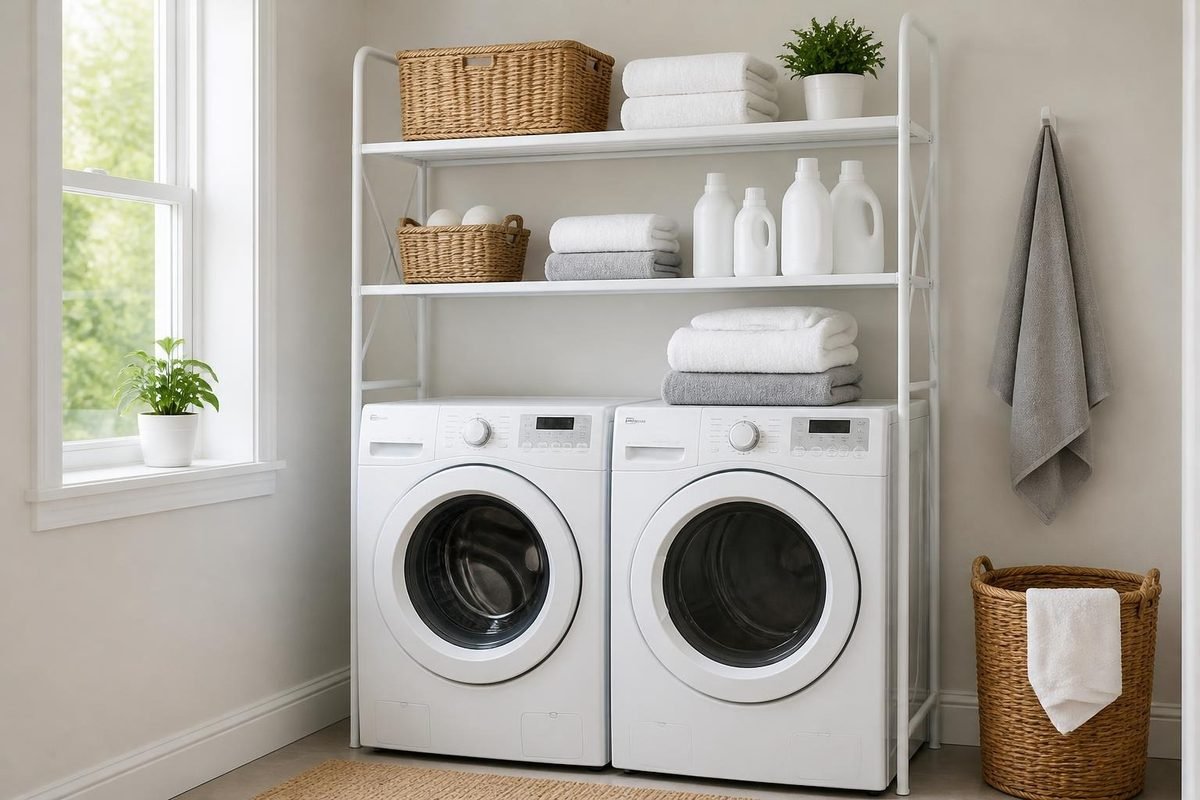
The space above your machines is often the largest empty area in a small laundry room. An over-the-washer storage shelf stands on the floor and straddles both machines, so you get two or three shelves without drilling into the wall. That makes it a good fit for renters.
Compare the unit with your measurements before you buy. It needs to be wider and taller than your machines, with enough room for a top-load lid to open fully. Keep heavy jugs on the lowest shelf and lighter items up high.
2. Use Wall Shelves or a Cabinet Up High
If you can mount things on the wall, a cabinet or a couple of sturdy shelves above the machines will hold backup detergent, cleaning supplies, and extra towels. A cabinet with doors hides visual clutter, which helps a tiny room feel calmer. Mount shelves into studs or use anchors rated for the weight, and keep everyday items at a height you can reach without a step stool.
3. Slide a Slim Rolling Cart Into the Gap
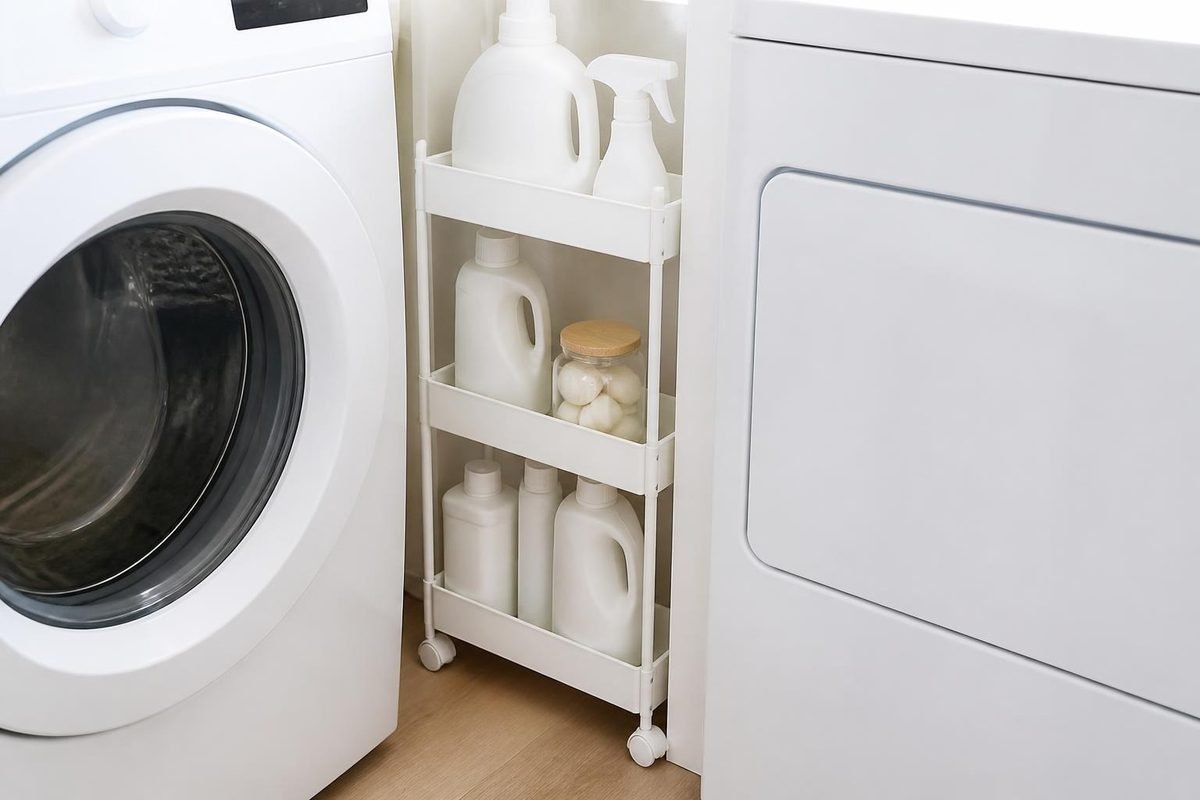
That narrow gap between the washer and dryer, or between a machine and the wall, tends to collect lost socks and lint. A slim rolling laundry cart turns it into a pull-out pantry for detergent, stain remover, and dryer sheets.
Pick a cart a little narrower than your gap so it rolls in and out without scraping. Put the heaviest bottles on the bottom tier so the cart does not tip, and keep it clear of the dryer vent.
4. Stack the Washer and Dryer With a Stacking Kit
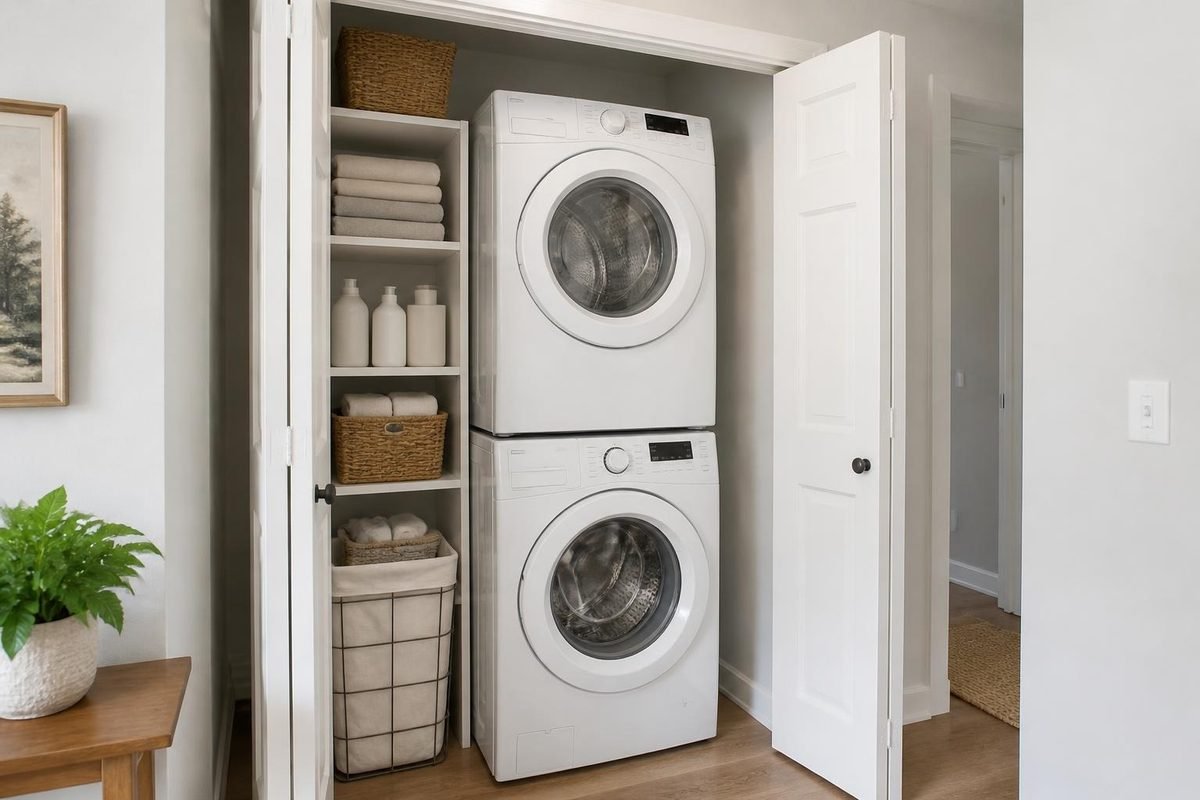
Stacking is the biggest laundry room space saver if your machines allow it. Many front-load washers and dryers are designed to stack using a manufacturer stacking kit, which frees up a full footprint of floor for a shelving unit, a hamper, or a folding cart.
Only stack machines that the manufacturer says can be stacked, and use the washer and dryer stacking kit made for your exact models. Top-load washers generally cannot have a dryer stacked on them. If you are not sure, check the manual or ask a professional to install it.
5. Mount a Wall Drying Rack
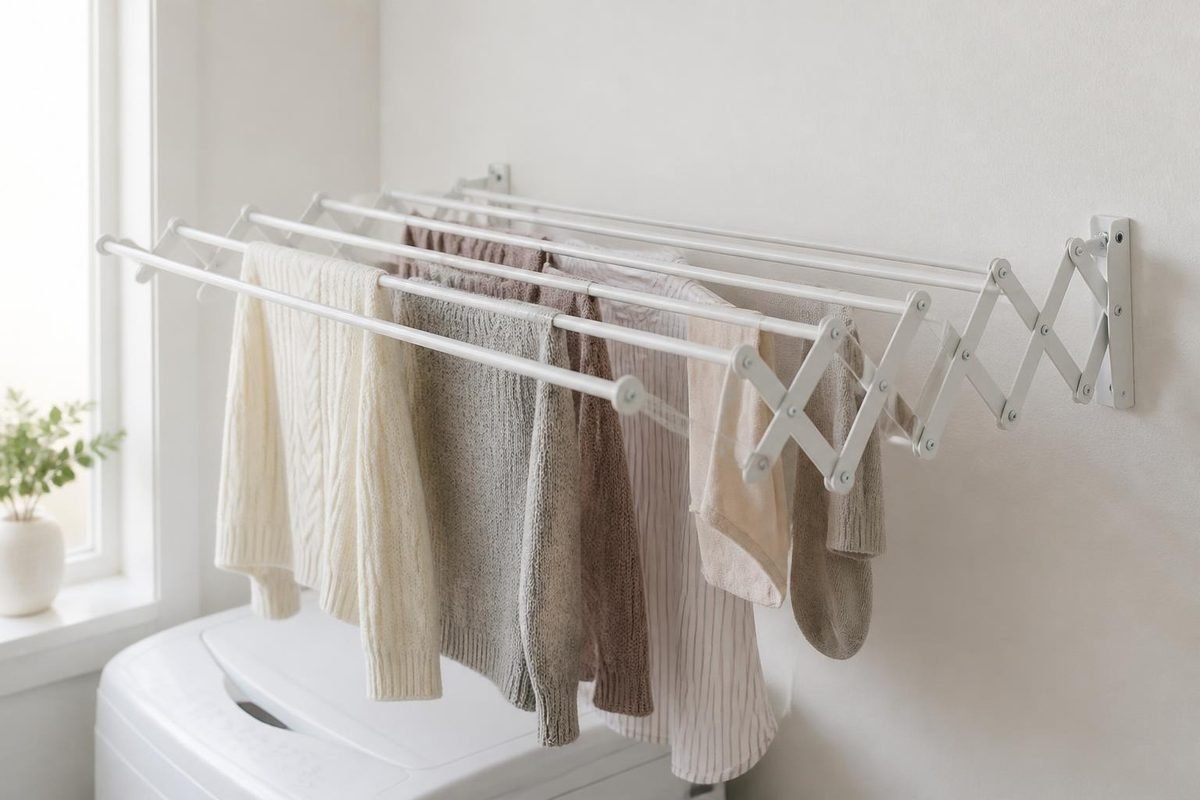
A freestanding drying rack eats floor space every time you use it. A wall-mounted drying rack folds flat against the wall when you are done and pulls out when you need it for sweaters, delicates, and workout clothes.
Mount it where it will not block a door or the front of the machines, and leave room below so wet items do not drip onto anything. If you rent, ask your landlord before drilling, or look for a rack that hangs over a door.
6. Hide the Ironing Board
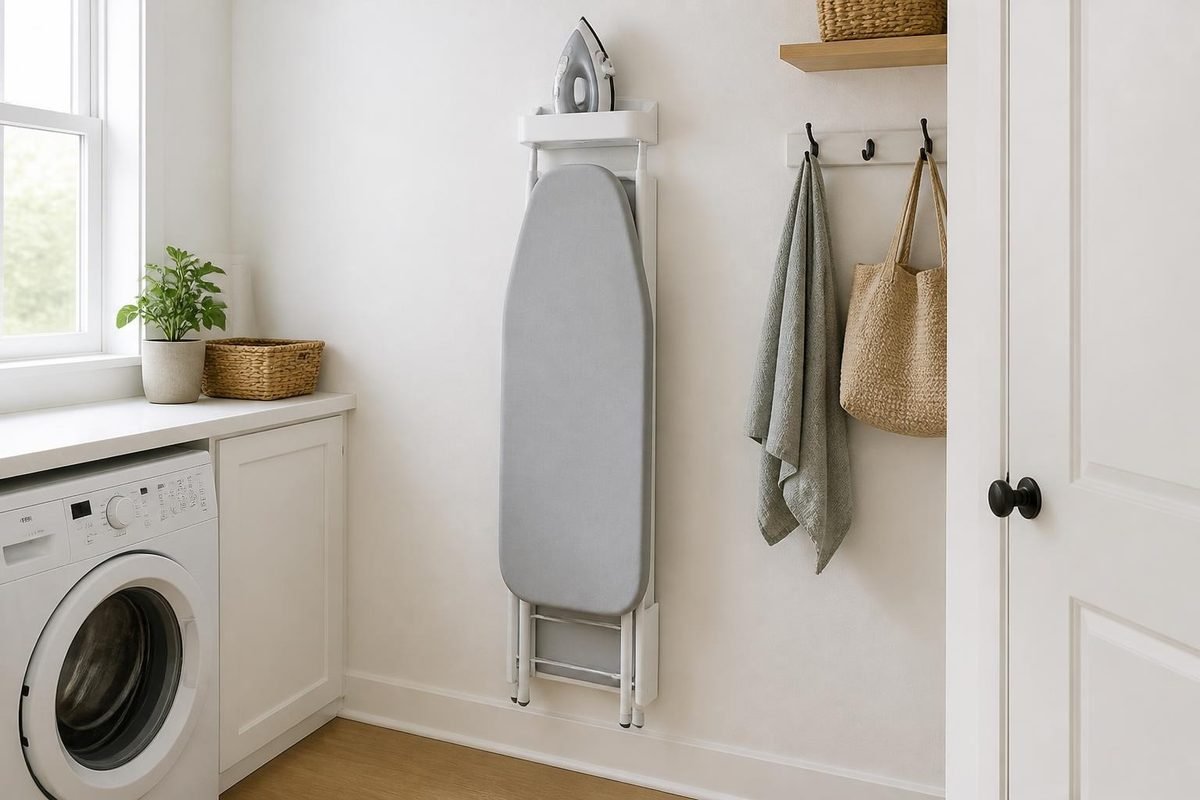
A full ironing board leaning against the wall is awkward and easy to knock over. An ironing board holder that mounts on the wall or hangs over a door keeps the board, and often the iron, flat and out of the way. A tabletop ironing board is another option if you only press a few items at a time.
Let the iron cool completely before you put it back in a holder or on a shelf.
7. Hang an Over-the-Door Organizer
The back of the laundry room door is free storage. An over-the-door organizer with pockets or baskets is ideal for small items like stain sticks, clothespins, lint rollers, and mesh wash bags. Check that the hooks fit your door and that the full organizer still lets the door close.
8. Make the Most of a Laundry Closet
A laundry closet with bifold doors has very little room, so every inch counts. Add a shelf or cabinet above the machines, use a tension rod across the top of the closet to hang clothes straight from the dryer, and keep supplies in a slim cart or on a narrow shelf beside the machines. Bifold doors usually cannot hold an over-the-door organizer, so use adhesive hooks on the side walls instead.
The same measure-first approach works in other tight spots. Our guide to under sink organization for a small bathroom shows how to plan storage around pipes and awkward corners.
Which Laundry Room Space Saver Should You Choose?
| Storage idea | Best for | Watch out for |
|---|---|---|
| Over-the-washer shelving | Side-by-side machines, renters | Top-load lids need full clearance |
| Wall shelves or cabinet | Backup supplies and towels | Needs drilling and proper anchors |
| Slim rolling cart | Narrow gaps beside machines | Can tip if the top tier is heavy |
| Stacking kit | Front-load pairs made to stack | Only works with compatible models |
| Wall drying rack | Air-drying without losing floor space | Must not block doors or machines |
| Over-the-door organizer | Small items and accessories | Does not fit most bifold doors |
Storage Ideas for a Stacked Washer and Dryer
Once your machines are stacked, the storage moves to the sides and the wall. Use the gap beside the stack for a slim rolling cart, or a narrow freestanding shelf if there is room. Add a wall rack or a shallow cabinet beside the stack for supplies, and keep the area directly in front of the controls clear. Leave space for the dryer vent and hoses, and follow the stacking kit instructions for your models.
Add a Folding Surface Without Losing Floor Space
Folding on top of the dryer works until the pile slides off. If you have side-by-side front-load machines, a washer and dryer countertop laid across both tops gives you a flat, wipeable folding station. Measure the combined width and depth of the machines first, and leave room at the back for hoses and the dryer vent. Do not use a countertop over a top-load washer, since the lid has to open.
No room on top? A wall-mounted fold-down table drops down when you need it and folds flat against the wall when you are done. Mount it into studs, and ask your landlord first if you rent.
Use Small Spaces You Might Miss
- The side of the dryer. A magnetic lint bin sticks to the metal side panel, so lint goes straight in and nothing sits on the floor. No drilling needed.
- A bare wall. A pegboard with hooks and small baskets holds brushes, scissors, clothespins and lint rollers in one spot you can see at a glance.
- Corners. An L-shaped or tiered corner shelf uses the dead corner beside the machines for spare towels or backup supplies.
- Inside cabinet doors. Slim racks or adhesive hooks on the inside of a cabinet door hold gloves, sponges and small cleaning supplies.
- Existing rods and wire shelves. S-hooks turn any rod or shelf edge into hanging storage for mesh bags, brushes and a small ironing board.
- Overhead. In a very tight room, a ceiling-mounted pulley drying rack or a retractable clothesline keeps wet clothes up and out of the way, then disappears when laundry is done.
Sort, Decant and Label on a Budget
Some of the cheapest fixes are about how you store things, not how much storage you add. Decant powder, pods and dryer balls into clear containers so you can see when you are running low, and keep pods in a closed container up high if kids or pets live with you. Label each shelf or bin, even with masking tape and a marker, so everyone puts things back in the same place.
For sorting, use matching or stackable laundry baskets for whites, darks and delicates. Matching baskets look calmer on a shelf, and stackable ones take up the footprint of just one when they are empty. If you have a lower cabinet, a tilt-out hamper hides dirty laundry completely.
Cheapest first: clear out anything that is not laundry related (free), add labels, hang a tension rod for clothes on hangers, then add S-hooks and an over-the-door organizer. Buy a bigger piece, like a slim cart or shelving unit, only if you still need more space.
What to Keep in a Small Laundry Room
Keep the products you use every week close to the machines, and move the rest somewhere else.
- Keep: detergent, stain remover, dryer sheets or wool balls, a lint roller, mesh bags, and a small trash can for lint.
- Store up high: backup supplies and cleaning products. Keep detergent pods and chemicals out of reach of children and pets.
- Move out: bulk paper goods, seasonal items, and anything that is not laundry related. For ideas on finding space elsewhere, read our post on creative storage solutions for small homes.
If your whole home could use a reset, our 2027 Fresh Start Home Reset Bundle is a $9 printable with checklists to help you declutter and organize one room at a time.

Frequently Asked Questions
How can I add storage to a small laundry room without drilling?
Use an over-the-washer shelving unit that stands on the floor, a slim rolling cart in the gap beside the machines, an over-the-door organizer, and a tension rod for hanging clothes. All of these can be removed when you move.
What can I put between my washer and dryer?
A slim rolling cart is the most common choice for the gap between a washer and dryer. Measure the gap at the front and back, choose a cart slightly narrower than the smallest number, and keep it away from hoses and the dryer vent.
Can any washer and dryer be stacked?
No. Only machines that the manufacturer says can be stacked should be stacked, and you need the stacking kit made for those models. Many front-load pairs can be stacked, while top-load washers usually cannot.
How high should a shelf be above a washer?
There is no single right height. The shelf needs to clear the machine, any top-load lid when it is fully open, and the controls, while staying low enough for you to reach. Measure your machines and check the manual before you install anything.
What is the best laundry room space saver?
If your machines can be stacked, stacking them saves the most floor space. If they cannot, over-the-washer shelving and a slim rolling cart usually add the most storage for the least effort.
How do you organize a laundry closet with no shelves?
Measure the closet opening and the space above the machines first. Then add a freestanding over-the-washer unit or a tension-mounted shelf, hang an organizer on the back of the door for small supplies, and slide a slim rolling cart into any side gap. Keep only what you use every week in the closet, and store bulk refills somewhere else.
What’s the best way to store laundry detergent in a small space?
Keep one bottle or one container of pods within reach, on a shelf above the machines or on the top tier of a slim cart, and store bulk refills in another closet. Wipe drips so shelves don’t get sticky, and keep pods and other laundry products up high and closed if children or pets live with you.
How do I make a small laundry room look bigger?
Clear the floor and the tops of the machines first, because visible clutter makes any room feel smaller. Use matching baskets or clear containers so shelves look calm, hang tools on the wall or the back of the door, and keep surfaces mostly empty. Good lighting and a light wall color help too, and a slim cart that rolls away keeps the floor open.
Conclusion
A small laundry room does not need more square footage, just better storage. Measure your machines, gaps, and doors first. Then use the space above the machines for supplies, fill narrow gaps with a slim cart, move drying and ironing onto the walls, and use the back of the door for small items. Start with the one change that clears the most clutter, live with it for a week, and add the next piece only if you need it. Your laundry room will be easier to use and much calmer to walk into.
You might also like: Small Bathroom Storage Ideas and Maximizing Your Space: Creative Solutions for Small Homes.
Want a simple plan to reset your home? Get the Fresh Start Home Reset Bundle or the ebook Small Space, Calm Life.